
Istanbul small hotels have quietly become the smarter choice for travelers who want character over corridors and conversation over check-in queues. A handful of well-kept rooms in a historic building can offer more comfort, more personality and more genuine local life than a tower with hundreds of identical doors. This article looks closely at why that is true, using Faik Pasha Hotels in Çukurcuma, Beyoğlu, as a working example of what a small, family-run boutique stay actually delivers.
Big hotels are built for volume: predictable layouts, centralized services, and a front desk that rarely remembers your name twice. Istanbul small hotels, by contrast, are built around a building, a neighbourhood and a family story. That difference shapes everything from the furniture in your room to the breakfast on your table, and it is worth understanding in detail before you book your next trip to the city.
Contents
- Intimacy versus scale: what a 19-room property can do
- Historic buildings and honest restoration
- Why the Çukurcuma neighbourhood matters
- Choosing a room: from standard doubles to penthouses
- Breakfast as part of the experience
- Staying at Faik Pasha: what it actually feels like
- A day in the life of a boutique guest
- Istanbul small hotels vs. big hotels: a comparison
- Who small hotels suit best, and who they don’t
- What our guests say
- Where boutique stays in Beyoğlu are heading
- Frequently asked questions
Intimacy versus scale: what a 19-room property can do
The appeal of Istanbul small hotels starts with simple arithmetic. A property with a limited number of rooms can know its guests, remember a request from the day before, and adjust the pace of service without a chain of command getting in the way. Large hotels depend on systems; small hotels depend on people, and that distinction is felt from the first phone call to the last goodbye.
At Faik Pasha Hotels, this scale is deliberate rather than accidental. The property occupies four historic buildings on Faik Pasha Street rather than one large block, which means guests move through connected but distinct spaces instead of a single anonymous hallway. This is one of the clearest practical differences between small hotels in Istanbul and the big-brand alternative: space is organized around the building’s original character, not around maximizing room count.
It also means decisions get made quickly. A family business does not need a regional manager’s approval to fix a problem or adjust a check-in time within the limits of availability. That responsiveness is a recurring theme in why travelers choose Istanbul small hotels again on their next visit rather than defaulting to a familiar chain name.
There is also a quieter benefit that rarely makes it into marketing copy: noise and crowd control. With four buildings and a limited room count spread across them, there is no large lobby bar, no event space hosting a wedding on a Saturday night, and no elevator bank crowded with tour groups moving between floors. For travelers who find big-hotel public spaces exhausting rather than exciting, this kind of restraint is a feature, not a limitation.
Historic buildings and honest restoration
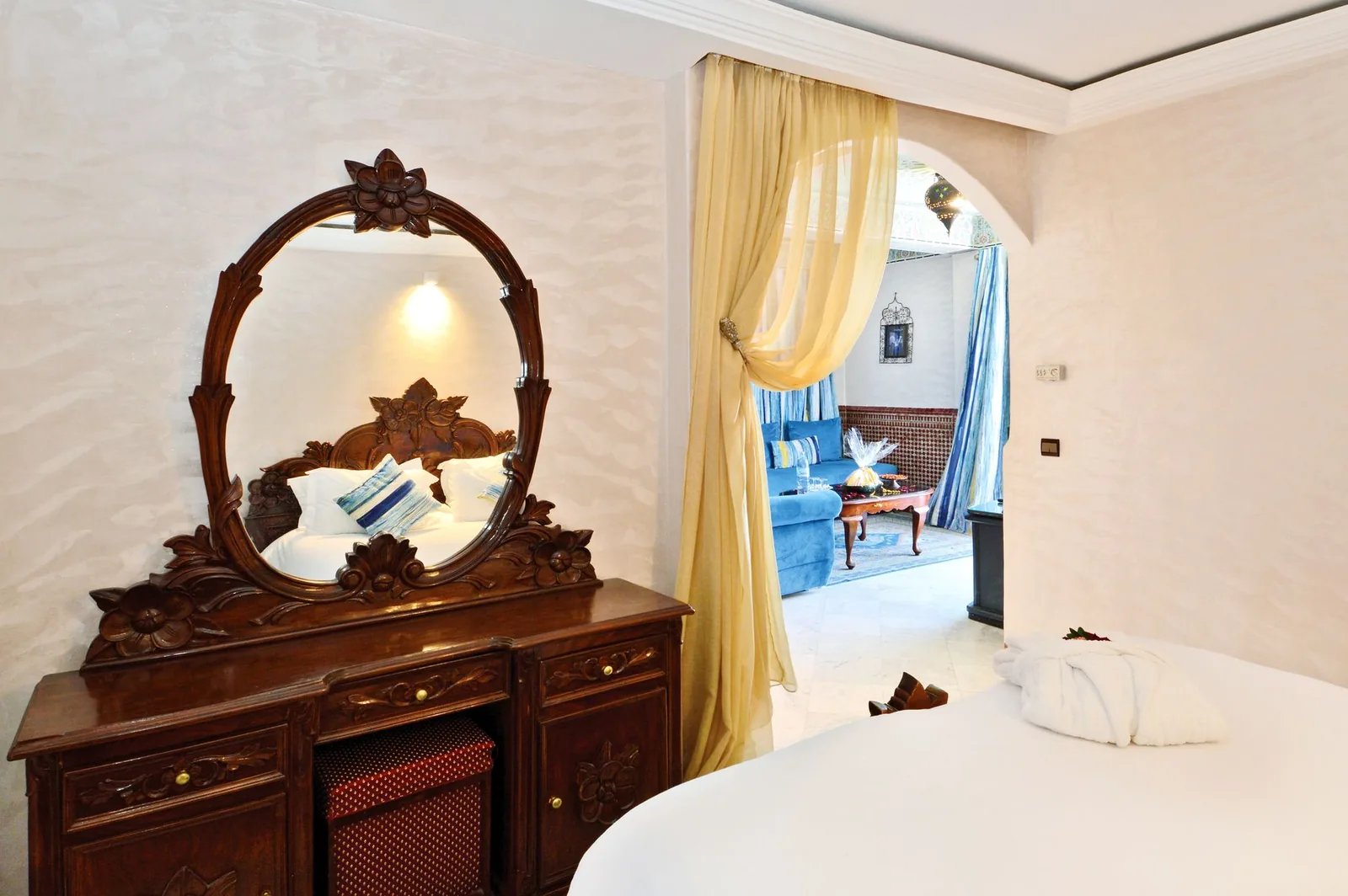
Faik Pasha Hotels occupies buildings constructed in the late 1800s and fully restored in 2010 in line with their original design, construction techniques and plans. That is a different proposition from a hotel built new and decorated to look old. The wooden ceilings, original floor patterns and period proportions were worked around, not reproduced from scratch, which is exactly the kind of detail that defines genuine small boutique hotels Istanbul travelers seek out.
The interior direction came from founder and designer Meral Kalav Demir, a retired lawyer who spent about three years collecting antique furniture from Istanbul antique dealers and flea markets. The result is a layered interior of handmade carpets, hundreds of period oil paintings and furniture with real provenance rather than catalogue reproductions. You can see more of this story on the About Faik Pasha Hotels page.
For guests who care about restoration quality and fire safety in a historic structure, it is worth reading the hotel’s own Historic Building & Fire Safety Information, which outlines how a century-old building is maintained to modern safety standards without losing its original character.
This kind of restoration work is slow and particular by nature. Original beams have to be assessed and reinforced rather than swapped out, period floor patterns have to be matched piece by piece, and plumbing and wiring have to be threaded through walls that were never designed for them. The payoff is a building that still reads as what it was, rather than a new structure wearing an old building’s face, which is precisely what separates a genuine historic stay from a themed one.
Why the Çukurcuma neighbourhood matters
One of the strongest arguments for choosing Istanbul small hotels over large towers is neighbourhood integration. Çukurcuma, where Faik Pasha sits, is known for its antique shops, vintage furniture stores and restoration workshops rather than for high-rise skylines. Staying here means your daily walk passes dealers sorting Ottoman-era objects, not a row of identical retail chains.
Çukurcuma also sits close to Cihangir, Galata, Istiklal Street and Taksim, placing guests within reach of Istanbul’s most walkable cultural corridor. You can explore the area in more depth on the dedicated Çukurcuma guide, or browse the wider Places to visit section for ideas beyond the immediate neighbourhood, including Galata Tower and Taksim Square.
This is also the neighbourhood connected to Orhan Pamuk’s novel, and travelers interested in that literary link often combine their stay with a visit described in Staying at a Hotel Near Museum of Innocence in Çukurcuma. For antique hunters specifically, the Cukurcuma Antique Shops guide is a useful companion piece.
What makes this neighbourhood especially suited to small hotels is scale consistency. Çukurcuma’s streets are narrow, its buildings are mostly low-rise, and its commerce is built around small, specialist shops rather than department stores or malls. A 19-room hotel spread across historic buildings fits this texture naturally, while a 300-room tower simply would not belong on these streets, both physically and in spirit.
Choosing a room: from standard doubles to penthouses
A genuine advantage of Istanbul small hotels with a varied building stock is room diversity. Faik Pasha offers nine distinct room categories, which means the property can serve a solo traveler and a family of five without forcing either into a compromise layout. The full breakdown is available on the All room types page.
At the compact end, the Standard Double Room at 25 m² suits travelers who mainly need a comfortable base. The Superior Double Room at 30 m² adds a kitchenette, useful for anyone wanting to prepare a simple meal or store breakfast leftovers. Families or small groups often look at the Superior Triple Room, which combines a double bed with a sofa bed across 35 m².
For those who want natural light and outdoor space, the Superior Double Room with Balcony at 40 m² is worth considering. Travelers wanting more room to spread out should look at the Executive Suite with Balcony, a 52 m² layout with two bathrooms and a small kitchen.
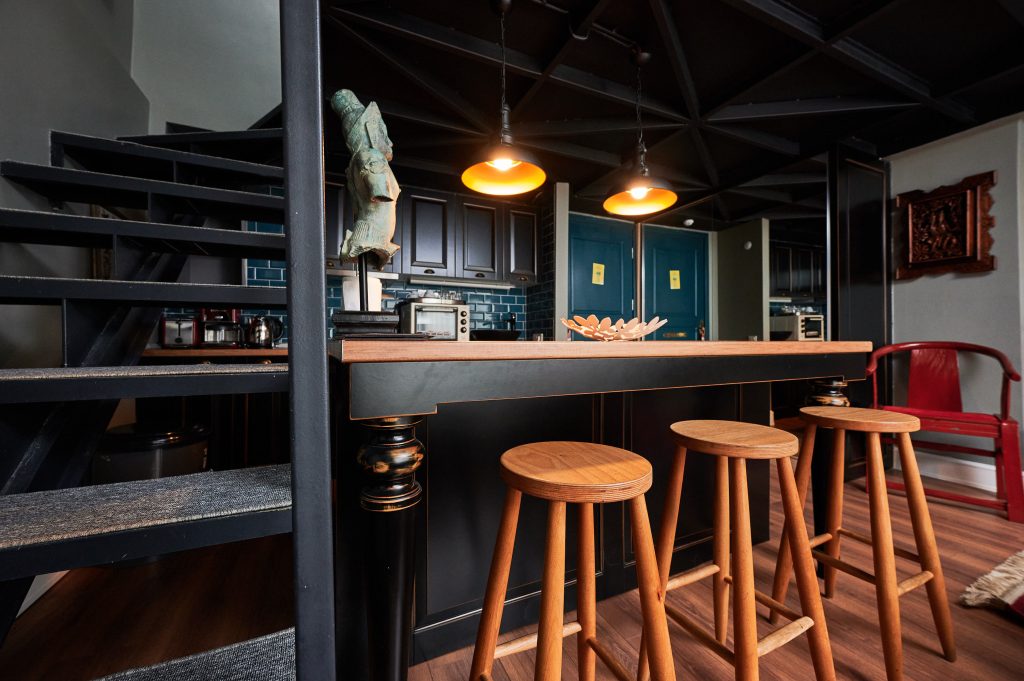
At the top of the range sit the apartment-style options: the Penthouse with Terrace, a duplex with a full kitchen, large terrace and a hammam-style marble bathroom; the Panoramic Penthouse with Lift, with two bedrooms, two bathrooms and an open kitchen; and two Grand Suite apartments, the Grand Suite Two-Bedroom Apartment and the Grand Suite Deluxe Apartment at 80 m², which includes a spa tub and a hammam-style bathroom. These kitchen-equipped apartments are particularly well suited to families, groups and longer stays, something that most small hotels in Istanbul simply cannot offer because they lack the spatial variety a historic multi-building property has.
This spread matters practically, not just aesthetically. A couple on a weekend break has different needs than a family splitting a trip between sightseeing and remote work, and a nine-category room list means both can be matched to a layout that suits their actual stay rather than the nearest available option.
Breakfast as part of the experience
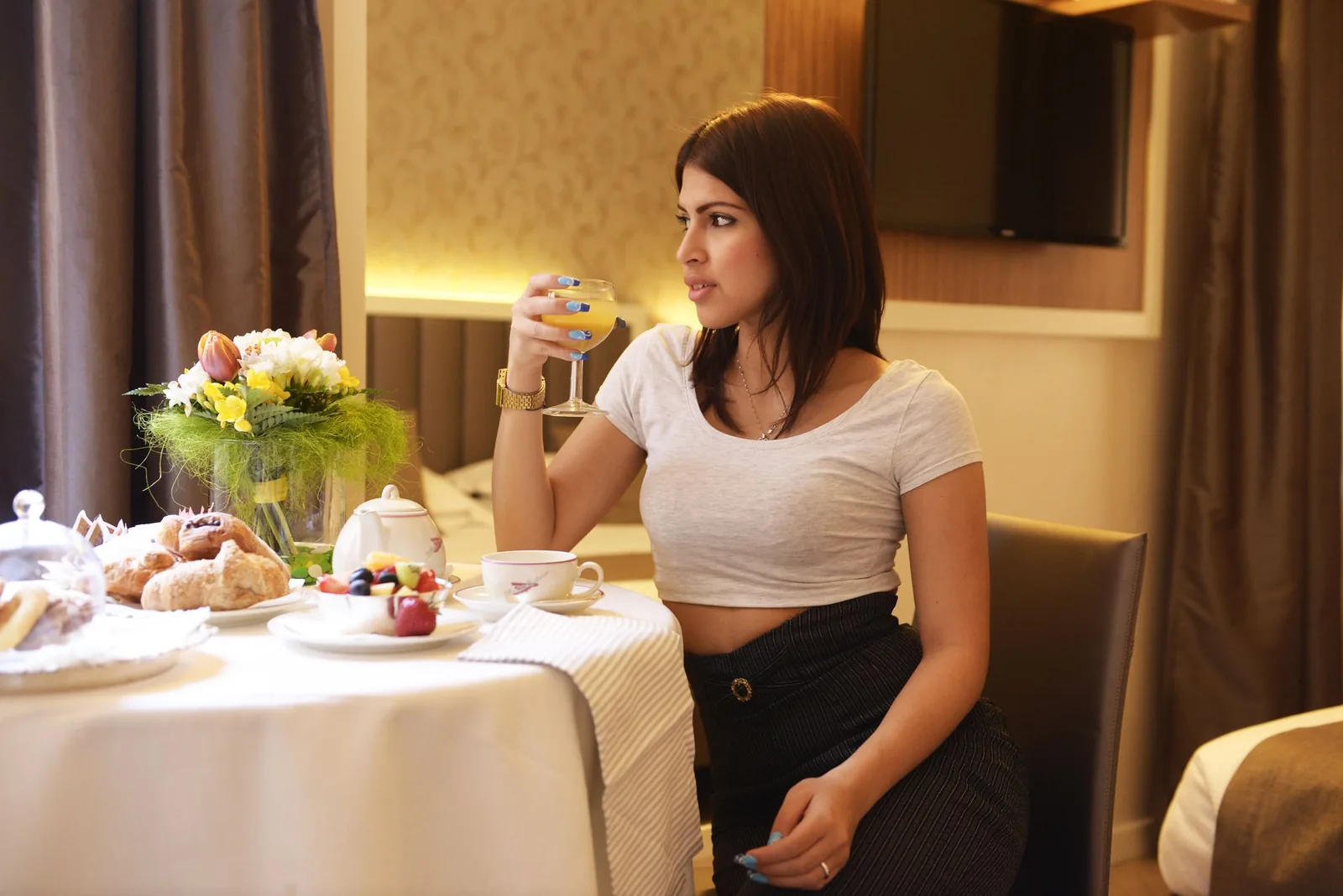
Breakfast is one of the clearest places where Istanbul small hotels distinguish themselves from larger properties. Faik Pasha serves an open buffet where guests consistently mention the homemade breads, pastries and jams, prepared on-site rather than trucked in from a central kitchen. The on-site Faik Pasha Cafe runs from 08:00 to 17:00, serving Turkish and Mediterranean dishes, with à la carte breakfast plates and egg dishes available after the buffet hours.
There is no separate restaurant or bar on the property, which keeps the focus on the cafe and its courtyard rather than spreading service thin. Guests can read more about the food offering on the Cafe Restaurant page. This kind of single, well-executed food offering is a recurring strength of smaller properties: instead of running three underwhelming venues, a small hotel can run one that it does properly.
For travelers staying in one of the kitchen-equipped suites or penthouses, breakfast becomes optional rather than compulsory. Some guests prefer to buy fresh bread and produce from the neighbourhood’s own small shops and eat on their own terrace, which is a kind of flexibility a standard hotel room rarely allows.
Staying at Faik Pasha: what it actually feels like
Daily life in a historic boutique stay follows a different rhythm than a hotel tower. Check-in is at 14:00 and check-out at 11:00, with early arrival or late departure handled on request depending on availability. Rooms receive daily housekeeping, and every room includes free Wi-Fi, air conditioning, a minibar and a satellite smart TV, so the historic setting does not come at the cost of basic modern comfort.
Families traveling with young children can request a baby cot and high chair, and the property offers family-friendly configurations such as the Superior Triple and the Grand Suites. Some buildings include a lift, including the Panoramic Penthouse with Lift, though not every historic building on the street has one, which is worth checking in advance if stairs are a concern. There is no spa, sauna or gym on site, and the historic buildings have stairs without rooms specifically designed for guests with disabilities; details are listed on the Accessibility Information page.
For a closer look at how a suite feels in person, a short video tour is a useful preview before booking.
Those drawn to the apartment-style terraces and larger layouts described above may also want to read Boutique Suites in Istanbul for a closer comparison of the terrace and duplex options, and the broader Beyoğlu small hotels guide for how this property fits into the wider district.
A day in the life of a boutique guest
It helps to picture an actual day rather than a list of amenities. A typical morning starts with breakfast in the courtyard or cafe before the street outside fully wakes up, while antique shop shutters are still half-raised and delivery carts are making their rounds. By mid-morning, Çukurcuma’s narrow lanes are busy enough for browsing but never as crowded as Istiklal Street a few minutes away.
Afternoons usually mean a walk down toward Cihangir for coffee, or up toward Galata for the tower and its surrounding streets, both within easy walking distance. Evenings tend to settle back into the neighbourhood itself, since Çukurcuma has its own small restaurants and bars that do not require a taxi or a long walk to reach. This rhythm, slow mornings, walkable afternoons, local evenings, is something Istanbul small hotels in residential districts can offer in a way that hotels built around a transport hub or a business district usually cannot.
By the time guests return to their room at night, the contrast with a large hotel becomes clear again: no long elevator wait, no anonymous corridor, just a short walk up a historic staircase to a room that has been exactly the same since check-in, arranged the way they left it.
Istanbul small hotels vs. big hotels: a comparison
The table below summarizes the practical differences travelers notice most when comparing a boutique historic stay against a standard large hotel in central Istanbul.
| Factor | Istanbul small hotels (e.g. Faik Pasha) | Typical large chain hotel |
|---|---|---|
| Building character | Restored 19th-century historic buildings | Modern purpose-built tower |
| Interior design | Antique furniture, period art, handmade carpets | Standardized, chain-wide decor |
| Room variety | Nine categories from standard doubles to apartment penthouses | Few, largely identical room types |
| Food offering | Single on-site cafe, homemade breakfast focus | Multiple venues, often outsourced catering |
| Service style | Family-run, personal, flexible | Shift-based, procedure-driven |
| Neighbourhood | Çukurcuma antique quarter, close to Cihangir and Galata | Often business districts or tourist strips |
| Facilities | No spa or gym; focus on rooms and courtyard | May include spa, gym, multiple restaurants |
Neither model is universally better, but the comparison makes clear why travelers who prioritize atmosphere and neighbourhood life over resort-style facilities tend to prefer Istanbul small hotels for city breaks.
Who small hotels suit best, and who they don’t
It is worth being honest about who benefits most from this kind of stay. Travelers who value design, quiet streets, walkability and a personal relationship with staff tend to get the most out of Istanbul small hotels. Couples, solo travelers, antique and design enthusiasts, and families who prefer an apartment-style suite over a standard double room all fit this profile well.
On the other hand, travelers who specifically want an on-site gym, spa, swimming pool or multiple restaurant choices within the same building will find that a historic boutique property like Faik Pasha is not built for that. Those facilities simply are not part of what a restored 19th-century building can realistically offer, and it is better to know that before booking than to be surprised at check-in.
Similarly, guests who need fully accessible rooms for mobility reasons should check the Accessibility Information page in advance, since historic staircases are a structural reality of this kind of building rather than something that can be modified without compromising the architecture itself.
What our guests say
Rather than relying on marketing language, it helps to read what guests have actually written after staying at Faik Pasha. One recurring theme is the sense of having found the right base in the right part of the city:
“we picked the perfect place in the most perfect area of the city” – Summer Tyme Odell, April 2026, Tripadvisor
The same guest also described the comfort of a larger apartment-style room:
“We stayed in the Penthouse with the lift which felt like our home away from home.” – Summer Tyme Odell, April 2026, Tripadvisor
Returning guests are another strong signal for a small, family-run property, since repeat visits usually mean the experience held up over time:
“We travel to Istanbul 3-4 times a year and never think of staying else where.” – Aykut K, May 2025, Tripadvisor
You can read the full set of reviews, including the hotel’s recognition as a Tripadvisor Travellers’ Choice 2026 property, or browse additional guest feedback on Google and Otelz before booking.
Where boutique stays in Beyoğlu are heading
The direction of travel for Istanbul small hotels points toward more, not less, demand for residential-style, character-driven stays. As remote work normalizes longer city visits, travelers are increasingly weighing kitchen access, quiet streets and neighbourhood texture alongside basic comfort, which favors apartment-style suites over standard hotel rooms. Çukurcuma and the wider Beyoğlu district benefit from this shift because their housing stock of 19th-century buildings naturally suits conversion into boutique accommodation rather than large new-build towers.
At the same time, guests are becoming more selective about authenticity. A hotel that can show, rather than claim, its restoration history and sourcing of furniture has an advantage over newer builds dressed in a vintage theme. This is also why neighbourhood-level content, cultural events and local guides matter more than before; properties connected to real local life, including Events in Istanbul such as film festivals and art fairs nearby, offer guests more reasons to extend their stay or return. For travelers planning around Beyoğlu’s cultural calendar, pairing a stay with something like the Filmekimi 2026 autumn film season is a good example of how a small hotel’s location becomes part of the itinerary rather than just a place to sleep.
Expect the gap between generic hotel stock and genuinely historic small properties to widen over the next few years, as travelers get better at telling the difference between a building that has lived through a century and one that has simply been designed to look like it has.
Frequently Asked Questions
What exactly counts as one of the Istanbul small hotels?
Generally, these are properties with a limited number of rooms, often in restored historic buildings, run with a more personal, family-style approach rather than standardized chain procedures. Faik Pasha Hotels, spread across four historic buildings in Çukurcuma, is a representative example of this category.
Are small boutique hotels Istanbul travelers choose more expensive than big hotels?
Pricing varies by season and room type rather than by hotel size alone. What differs consistently is value per square meter of character: a boutique room in a restored historic building typically includes furniture, art and architectural detail that a standard hotel room does not.
Is Çukurcuma a good base for exploring Istanbul?
Yes. Çukurcuma sits close to Cihangir, Galata, Istiklal Street and Taksim, making it a practical base for walking into Beyoğlu’s main cultural and shopping areas. It also offers its own identity as an antique and vintage furniture district, which larger hotel zones usually lack.
Do small hotels in Istanbul suit families and groups?
Many do, provided they offer the right room types. At Faik Pasha, options like the Superior Triple Room, the Grand Suite Two-Bedroom Apartment and the Grand Suite Deluxe Apartment include extra space and kitchen facilities suited to families and small groups, with baby cots and high chairs available on request.
How do I get the best direct rate when booking?
Booking directly through the hotel’s own channels is the simplest way to access its stated offers. Reservations made by email or WhatsApp come with “A Personal Touch Pays Off — 5% Better Than Our Official Website Rates,” while booking directly on the website offers “Book Direct on Our Website — Enjoy Privileged Savings of Up to 15%,” and paying in cash on arrival adds “A Gentle Thank You for Cash Payments — An Additional 5% Courtesy Discount.”
If this kind of historic, character-filled stay sounds like the right fit, take a look at the full range of rooms and suites at Faik Pasha Hotels, from compact standard doubles to full apartment-style penthouses. You can book directly through the official reservation engine, or reach the team directly by email at reservations@faikpashahotels.com or on WhatsApp at +90 530 025 66 43 to ask about availability and current direct-booking offers.
Trackbacks & Pingbacks
[…] against options elsewhere in the city, it helps to read a broader overview such as this guide to small hotels in Istanbul, which puts Çukurcuma’s character into the context of the wider […]