
This Galata neighborhood travel guide is written for travellers who want more than a quick photo at the tower. Galata is a hill of steep lanes, old banking houses, galleries and tiny workshops, and it rewards people who slow down. Spend a few hours walking it properly and the district starts to tell its own story, layer by layer.
Most visitors arrive with one goal — the tower and the view — then leave without seeing the rest of the hill. This Galata neighborhood travel guide covers the history behind Galata’s skyline, the streets worth wandering, where to eat and browse, and practical notes for anyone planning to base themselves nearby. It is built around a simple idea: Galata makes far more sense once you understand how it was shaped.
Contents
A short history of Galata
The tower and its viewing deck
Winding streets and alleys worth finding
Galleries and the art scene
Shops, antiques and workshops
Where to eat and drink
Levantine architecture and Pera’s legacy
Staying near Galata
Galata areas compared
What our guests say
Frequently asked questions
The future of the neighbourhood
Galata neighborhood travel guide: a short history
Any proper Galata neighborhood travel guide has to start with the hill’s layered past. Galata was once a separate, walled town across the water from the old city, home for centuries to Genoese traders, Greek and Armenian merchants, and later Levantine families who ran banks and shipping houses here. The name itself survives in maps long before “Beyoğlu” became the wider district’s label.
Walking today’s streets, you are tracing the footprint of that old trading colony. Warehouses became apartment blocks, counting houses became cafés, and the fortified walls mostly disappeared — except for the tower that gave the hill its most recognisable silhouette. For deeper context on the wider area, the overview of Beyoğlu is a useful companion read before you set out.
What makes this part of the city different from, say, the old Ottoman core is its mixed, commercial, cosmopolitan character — a theme that comes up again and again in this Galata neighborhood travel guide, because it explains almost everything you’ll see on the ground.
It also helps to know that the hill’s commercial role never really faded. Banking houses gave way to trading offices, and trading offices gave way to the design studios and galleries you’ll find today. Reading this history before you walk is, in many ways, the quickest shortcut any Galata neighborhood travel guide can offer.
The tower and its viewing deck
The Galata Tower is the obvious anchor point for any visit, and for good reason — it’s the one structure on the hill visible from almost everywhere in central Istanbul. Its conical roof and stone drum rise above the surrounding rooftops, and the viewing level near the top gives a sweeping look over the Bosphorus, the old city skyline and the rooftops of Galata itself.
Because the tower sits at the high point of the hill, every street in this Galata neighborhood travel guide eventually leads back toward it, whether you’re approaching from the water side or from Beyoğlu above. It’s worth treating it as a reference point rather than a single destination — use it to orient yourself, then wander outward from there rather than straight back down the same way you came.
If you’re staying somewhere nearby, it makes sense to visit either early or in the late afternoon, when the lanes around the base are calmer and the light on the stonework is better for photos.
First-time visitors sometimes assume the tower itself is the whole point of a trip to the hill, but most of what makes the area memorable happens in the streets around it. Think of the climb to the viewing deck as an orientation exercise rather than the main event, and save your energy for the walking that follows.
Winding streets and alleys worth finding
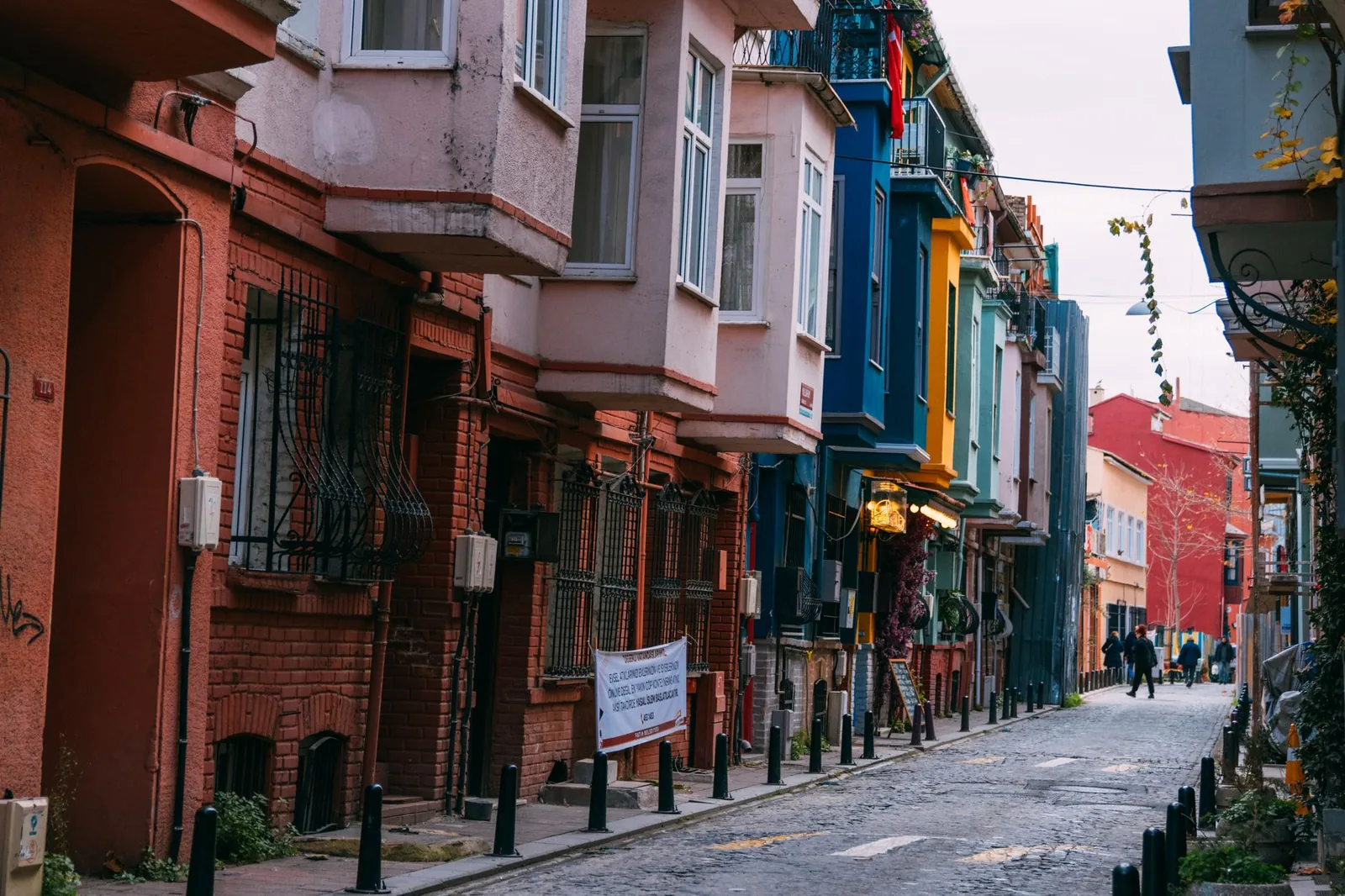
The real pleasure of Galata is not the tower itself but the net of alleys around it. Streets narrow suddenly, staircases cut between buildings, and laundry lines stretch across gaps barely wide enough for two people to pass. This is the part of any Galata neighborhood travel guide that’s hardest to write down precisely, because the appeal is in getting slightly lost on purpose.
A few things to look for as you walk:
- Stepped lanes connecting the lower streets near the water to the upper ridge by the tower
- Small courtyards behind unmarked doors, often glimpsed rather than entered
- Faded shopfront signage in Greek, Armenian or French lettering, a trace of the old merchant community
- Street-level ateliers where furniture restorers and metalworkers still operate
Galata connects naturally into neighbouring Çukurcuma and Cihangir, both worth folding into the same walk. If you want a structured route through one of those, the self-guided walking tour of Cihangir streets picks up almost exactly where a Galata ramble leaves off.
Give yourself at least an hour just for wandering, without a fixed route. Most of the detail that makes a good Galata neighborhood travel guide — the signage, the courtyards, the odd workshop door left open — only shows up when you’re not rushing between two marked points.
Galleries and the art scene
Galata and the surrounding streets have quietly become one of Istanbul’s denser pockets of contemporary art spaces, tucked into converted apartments and old commercial buildings. Exhibitions rotate often, and many galleries are free to walk into, which makes an afternoon of gallery-hopping an easy, low-cost addition to a day on the hill.
This is also where Istanbul’s bigger art calendar touches the neighbourhood directly. If your visit lines up with the autumn fair season, Contemporary Istanbul 2026 draws galleries and collectors from across the city, and many participating spaces are a short walk from Galata itself.
For a slower, museum-paced alternative, the Pera Museum visitor guide covers one of the area’s most consistent cultural stops, a short distance up the hill toward Pera proper.
Gallery openings, usually held in the early evening, are worth checking for during your stay. They’re informal, often free, and a good way to see interiors of buildings that otherwise stay closed to passers-by during the day.
Shops, antiques and workshops
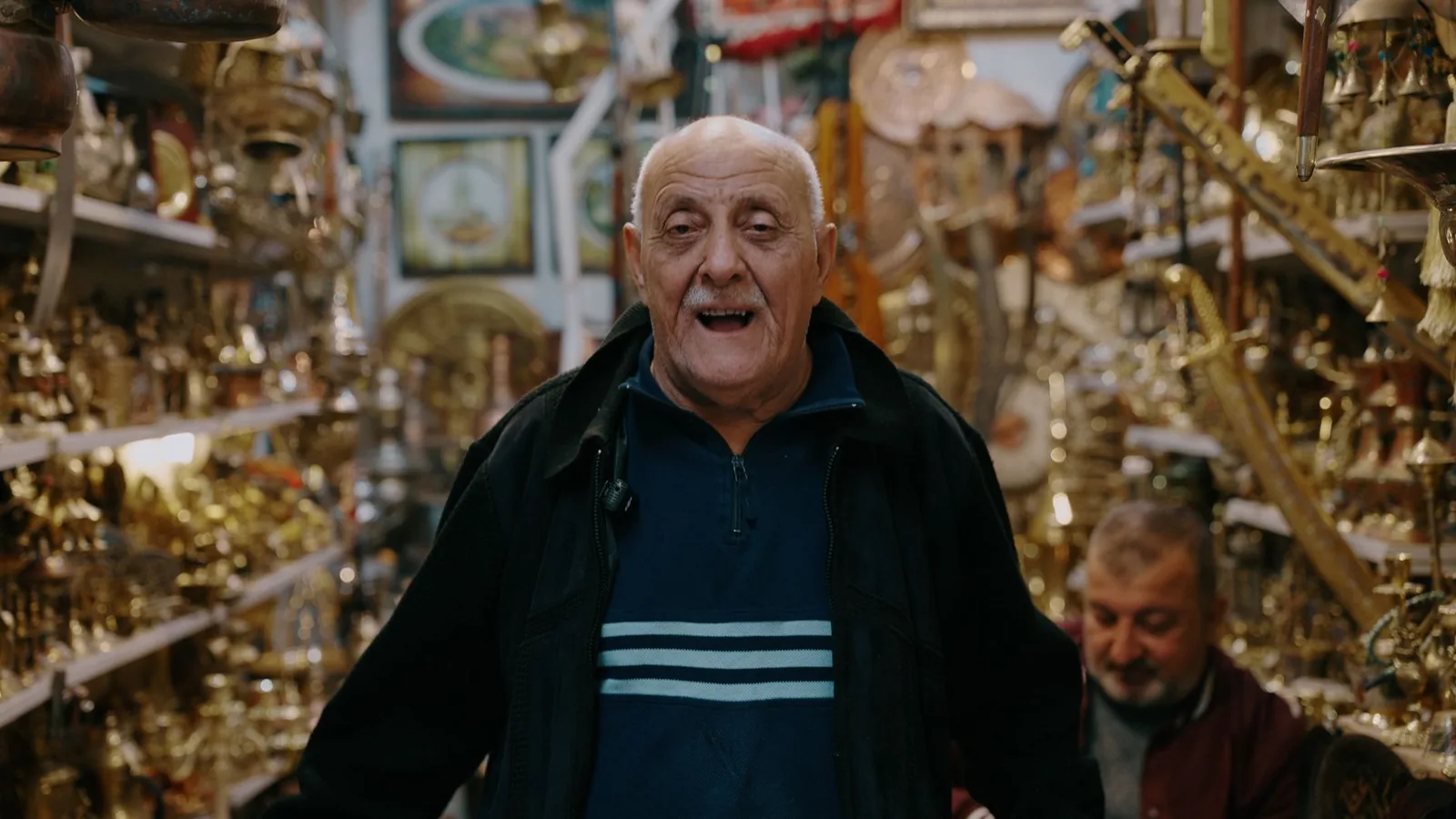
Commerce has defined Galata since its trading-post days, and that thread continues in a different form now — design studios, independent bookshops, small cafés, and workshops that repair instruments, bind books or restore old furniture. None of it feels staged for visitors; most of these businesses have been doing the same work for decades.
Just downhill in Çukurcuma, the antique trade is even more concentrated, with dealers who specialise in everything from Ottoman-era furniture to vintage lighting. It’s worth reading up on the area separately, since it rewards a dedicated visit rather than a rushed pass-through: see the Çukurcuma overview for specifics.
Coffee is part of the browsing ritual here too. Pairing a shop crawl with a proper coffee stop is covered well in the guide to the best coffee shops in Cukurcuma for slow mornings and antique browsing.
Prices in the smaller shops are rarely fixed, and a little conversation often goes further than a firm negotiating stance. Shop owners here tend to know the history of their own pieces in detail, and asking questions usually leads somewhere more interesting than a quick transaction.
Where to eat and drink
Dining around Galata ranges from simple lokantas serving home-style Turkish food to small wine bars and meyhanes tucked into side streets. The density of options is one reason seasoned visitors build an entire evening around this hill rather than treating it as a daytime stop only.
If you’d rather not plan a separate dinner outing, staying somewhere with its own kitchen can simplify things considerably — useful context for this is covered in the piece on boutique apartments in Istanbul, which explains why apartment-style stays suit longer visits built around exploring neighbourhoods like this one.
No matter where any Galata neighborhood travel guide sends you to eat, it’s worth booking ahead on weekend evenings — the better-known tables fill quickly once the sun goes down.
Lunch tends to be a quieter affair than dinner, and many of the smaller lokantas work on a daily changing menu rather than a fixed one. It’s a useful excuse to ask what’s freshly made that day rather than ordering from habit.
Levantine architecture and Pera’s legacy
The buildings that give Galata its character — tall, narrow apartment blocks with wrought-iron balconies, stone facades and the occasional Art Nouveau flourish — are part of a broader architectural story that stretches up the hill into Pera. Levantine merchant families, European consulates and local Greek and Armenian architects all left their mark on this stretch of the city during the same period that shaped Galata’s commercial streets.
For anyone genuinely curious about why the hill looks the way it does, the dedicated piece on Levantine architecture Istanbul: the stories behind old Pera goes much deeper than a single paragraph here can. It’s one of the more rewarding background reads for this part of the city, especially if you plan to walk from Galata up toward Taksim.
That walk itself passes several landmarks worth noting along the way, including the approach to Taksim Square, which bookends the Beyoğlu side of a typical Galata day.
Look up as you walk between the hill and Pera — many of the more interesting architectural details, carved lintels, old monograms, faded painted signs, sit above eye level and are easy to miss if you’re only watching the pavement.
Staying near Galata
Galata’s lanes are atmospheric to walk through, but most travellers prefer a quieter base just beyond the busiest tourist flow. Faik Pasha Hotels sits in Çukurcuma, a few streets from Galata’s antique quarter, inside four historic buildings on Faik Pasha Street dating to the late 1800s and restored in 2010 according to their original design and construction techniques.
The interiors were put together by founder Meral Kalav Demir, a retired lawyer who spent roughly three years sourcing antique furniture from Istanbul’s dealers and flea markets — many of them in the very antique quarter this guide has already covered. The result is a set of rooms with wooden floors and ceilings, handmade carpets and period oil paintings, closer in feel to a private Pera apartment than a standard hotel room.
Families and longer-stay guests often choose one of the suite categories with a kitchen. The Grand Suite Two-Bedroom Apartment suits small groups, while the Penthouse with Terrace offers a duplex layout with a full kitchen and a hammam-style marble bathroom.
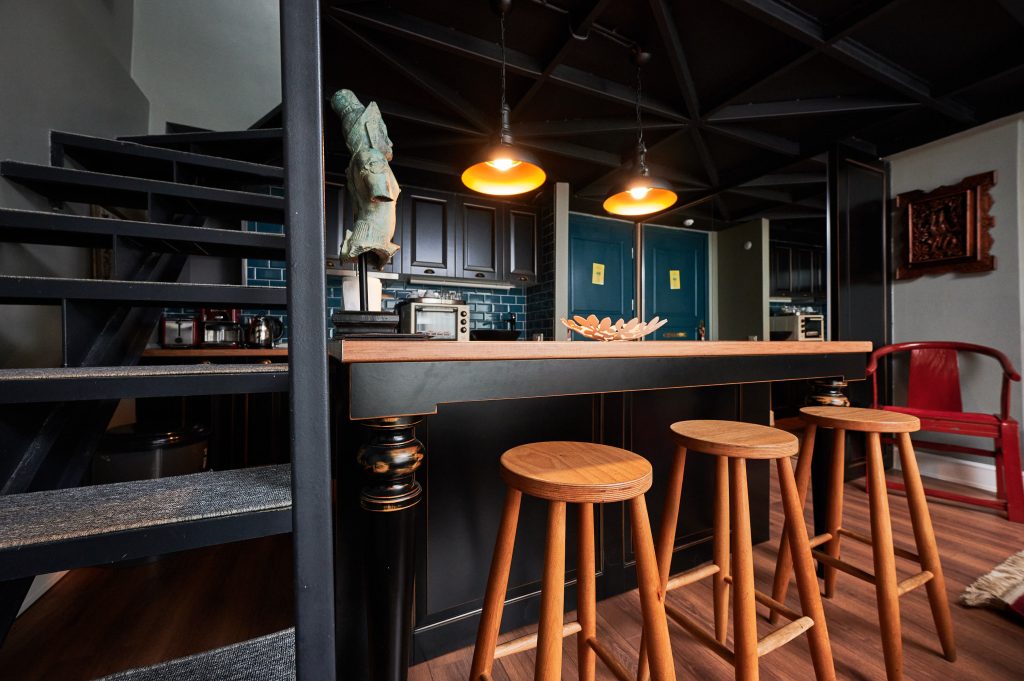
For a closer look at the layouts before you book, there’s a short room tour below.
Breakfast is served as an open buffet, and guests regularly mention the homemade breads, pastries and jams; the on-site Faik Pasha Cafe runs from 08:00 to 17:00 with Turkish and Mediterranean dishes through the day. This is also a boutique hotel near Galata Tower in practical terms — close enough for an easy visit, calm enough to return to afterward.
Many guests treat this as their base for accommodation in Beyoğlu more broadly, since Çukurcuma, Cihangir, Galata and İstiklal Street are all within the same general area, without the need to move hotels between sightseeing stops.
For anyone using this Galata neighborhood travel guide to plan where to sleep rather than just where to walk, the practical answer is almost always the same: stay a few streets off the hill itself, where the lanes are quieter at night but the tower is still a short, flat walk away.
Galata areas compared
Different pockets around Galata suit different kinds of trips. This table summarises the main options covered in this guide.
| Area | Best for | Character |
|---|---|---|
| Galata hill (around the tower) | First-time visitors, photography | Steep lanes, views, dense foot traffic near the tower |
| Çukurcuma | Antique browsing, slower mornings | Dealers, workshops, quiet residential streets |
| Cihangir | Cafés, long walks, sea views | Bohemian, leafy, resident-heavy |
| Upper Pera / İstiklal | Shopping, evening crowds | Busy pedestrian avenue, historic arcades |
None of these areas are far apart — most are within a fifteen-minute walk of each other — so it’s less a question of choosing one and more a question of deciding where to sleep versus where to spend your afternoons.
What our guests say
Travellers who base themselves near Galata and Çukurcuma often comment on how well-placed the area is for exploring on foot. A few recent notes from guests who stayed at Faik Pasha Hotels:
“we picked the perfect place in the most perfect area of the city” – Summer Tyme Odell, April 2026, Tripadvisor
“We stayed in the Penthouse with the lift which felt like our home away from home.” – Summer Tyme Odell, April 2026, Tripadvisor
“big particular rooms, excellent breakfast and very very nice staff” – Raimonda N, September 2026, Tripadvisor
You can read more guest feedback directly on Tripadvisor, where the hotel holds Travellers’ Choice 2026 recognition, or browse recent photos on Instagram and Google.
Frequently asked questions
How much time should I set aside for Galata?
Half a day covers the tower, the main streets and a gallery or two, but a full Galata neighborhood travel guide is best experienced over a longer, unhurried visit, ideally combined with neighbouring Çukurcuma and Cihangir on the same trip.
Is Galata walkable, or do I need transport between stops?
Almost everything described in this guide is reachable on foot once you’re on the hill, though the terrain is steep and uneven in places, so comfortable shoes matter more than a map.
What’s the difference between staying in Galata and staying nearby in Çukurcuma?
Galata itself is busier and more commercial; Çukurcuma, just beyond it, is quieter and residential, which is why many travellers choose it as a base while still treating Galata as an easy daytime destination.
Are there hotels near Galata Tower that still feel local rather than touristy?
Yes — look slightly off the main tourist lanes. Boutique, family-run properties in Çukurcuma and Cihangir tend to keep more of the neighbourhood’s original character than larger hotels directly beside the tower.
Does this guide cover Pera as well as Galata?
Pera sits just up the hill from Galata and shares much of its architectural history, so this guide references it throughout, particularly in the section on Levantine architecture Istanbul.
The future of Galata and this neighborhood travel guide
Galata has been reinventing itself for well over a century, shifting from a walled trading colony to a banking district to, more recently, a creative and residential hub pulling in galleries, studios and small hospitality businesses. That trajectory shows no sign of slowing. Restoration work on historic buildings across the hill continues gradually, and the area’s gallery density keeps growing each year, reinforced by events like the autumn art fair season.
What’s likely to stay constant is the texture that makes any Galata neighborhood travel guide worth writing in the first place: narrow streets that resist large-scale redevelopment, a merchant history still visible in the shopfronts, and a skyline anchored by one unmistakable tower. Travellers who come back to Istanbul repeatedly tend to notice small changes each time — a new gallery, a workshop that’s closed, a café that’s taken over an old storefront — while the overall character of the hill holds steady.
That’s really the point of writing a Galata neighborhood travel guide at all: not to pin down a neighbourhood that keeps shifting, but to give you enough of a map and a backstory that you can follow your own curiosity once you’re actually on the hill. The best version of a visit here usually departs from any fixed itinerary within the first twenty minutes anyway.
If you’re planning a stay nearby, whether for the galleries, the antique streets of Çukurcuma, or simply a calm base within reach of Galata Tower and İstiklal Street, Faik Pasha Hotels offers rooms and apartment-style suites across nine categories, from the compact Standard Double Room to the two-bedroom Grand Suite Deluxe Apartment. Book directly through the official reservation page for privileged savings of up to 15%, or reach the team by email at reservations@faikpashahotels.com or WhatsApp at +90 530 025 66 43 for a personal touch that pays off with better-than-website rates.
Trackbacks & Pingbacks
[…] building, antique furniture collected piece by piece, and a terrace over the rooftops of Çukurcuma can turn a stay into something you remember long after the trip is over. This is exactly the world […]
[…] If you’re searching for a bed and breakfast Beyoglu travelers actually write home about, the morning table usually tells you more than the lobby does. At Faik Pasha Hotels in Çukurcuma, breakfast isn’t an afterthought squeezed into a corner of a big hotel — it’s part of why guests come back. This is a look at what a proper bed and breakfast Beyoglu experience looks like, from the antique-filled rooms to the open buffet downstairs, just a short walk from the Galata neighborhood. […]