
A complete guide to Beyoglu’s hidden courtyards and passages is exactly what you need before you wander off Istiklal Avenue for the first time. Behind its crowded storefronts lies a quieter Istanbul of glass-roofed arcades, crumbling han courtyards and Levantine stairwells that most visitors walk straight past. This guide was written for travellers who want to slow down, look up, and actually find these places rather than stumble upon them by accident, and it covers enough ground that you could spend an entire weekend following it.
Beyoglu, once known as Pera, grew through the nineteenth century as a meeting point of Ottoman, European and Levantine communities. Merchants, bankers and diplomats built arcades and apartment blocks that still stand today, many of them connected by narrow passages that cut between streets. Understanding this layered history makes every courtyard and han feel less like a random doorway and more like a chapter of the city’s story, and it is the reason this particular guide to Beyoglu’s hidden courtyards and passages spends so much time on context before it sends you walking.
Contents
Why a guide to Beyoglu’s hidden courtyards and passages matters
Cicek Pasaji and the arcades around it
Han buildings: courtyards behind closed doors
Reading Levantine architecture in Pera
Shopping streets near Istiklal Avenue
A walking route through the hidden courtyards
Passages and hans compared at a glance
Visiting the courtyards through the seasons
Staying nearby in Cukurcuma
What our guests say
The future of Pera’s hidden spaces
Frequently asked questions
Why a guide to Beyoglu’s hidden courtyards and passages matters
A complete guide to Beyoglu’s hidden courtyards and passages has to start with a simple question: why do these spaces exist at all? In the late Ottoman period, Pera’s merchants built covered arcades, called pasaj in Turkish, to shelter shoppers from rain and sun while connecting one street to another. Many of these pasaj also had residential floors above, often built by Levantine or minority families who lived in the same buildings they rented out as shops below.
Today, walking Istiklal Avenue without stepping into its side passages means missing most of what makes Beyoglu unique. The avenue itself is loud and commercial, but a single doorway can lead you into a courtyard where time seems to have slowed down. This is the heart of what a complete guide to Beyoglu’s hidden courtyards and passages is meant to reveal, and it is worth repeating every time you reach a new block: look for the gaps between shopfronts, not just the shopfronts themselves.
For context on the wider district, our piece on Istanbul’s Pera district history traces how these streets developed from the Byzantine era through the cosmopolitan nineteenth century, which helps explain why so many passages and courtyards survive here rather than in other parts of the city.
Cicek Pasaji and the arcades around it
The best-known arcade on Istiklal Avenue is Cicek Pasaji, the Flower Passage, a nineteenth-century arcade built as an apartment building with shops on the ground floor. Its glass-covered roof and ornate ironwork make it one of the most photographed interiors in Beyoglu, and it remains lined with small restaurants and meyhanes. It is a good first stop on any walk through Beyoglu’s hidden courtyards and passages, since its entrance is directly on the avenue and easy to find even on a first visit.
Just beyond Cicek Pasaji, smaller arcades branch off toward the fish market and the backstreets. These narrower passages rarely appear in guidebooks, yet they often lead to quieter courtyards with faded shopfronts and old apartment entrances. Taking the time to look into these side corridors is part of what separates a rushed visit to Istiklal Avenue from a proper exploration of Beyoglu’s hidden courtyards and passages, and it is where this guide really starts to pay off.
Few visitors realise that some of these arcades once connected directly to residential courtyards used by the families who lived above the shops, a detail that only becomes obvious once you start noticing the repeated pattern of ground-floor commerce and upper-floor apartments. If you are planning a longer day in the area, our hour-by-hour walking plan for Beyoglu works well alongside this guide, mixing the arcades with other neighbourhood stops.
Han buildings: courtyards behind closed doors
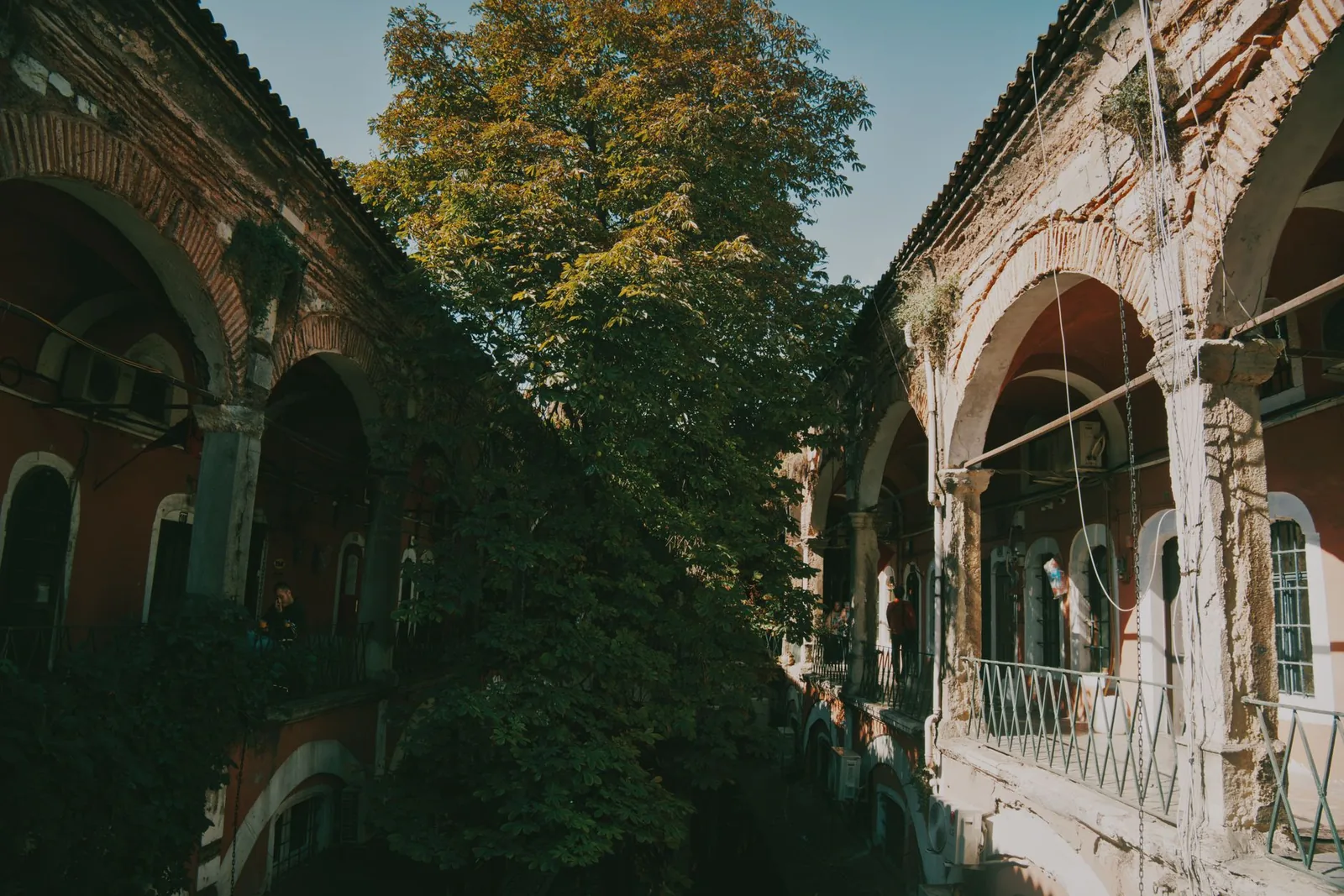
Beyond the open arcades, Beyoglu is dotted with han buildings, commercial blocks built around a central courtyard that once housed offices, small workshops and storage rooms. Unlike the pasaj, many hans are not obviously public, so travellers often walk past their plain street doors without realising a courtyard lies behind them. This is where a complete guide to Beyoglu’s hidden courtyards and passages becomes genuinely useful, since these entrances are easy to miss without knowing to look for them.
Inside a typical han courtyard, you will usually find a few stories of balconies wrapping around an open centre, sometimes still used by small ateliers, tailors or import-export offices that have operated from the same spot for decades. The pace inside is noticeably slower than the avenue just steps away. Peering into a han courtyard, even briefly, is one of the simplest ways to feel the older, working rhythm of Pera that still exists alongside its modern shops.
Some hans are named after the merchants or trades that originally filled them, and a little research before you go can turn an anonymous doorway into a specific story worth telling later. This is part of what makes a guide to Beyoglu’s hidden courtyards and passages worth returning to more than once, since no single walk uncovers every han in the district. Many of these buildings sit close to the antique trade that defines the neighbourhood around our hotel; if that interests you, our guide to Cukurcuma flea market shopping explains how the hans and the antique dealers of Cukurcuma are historically connected.
Reading Levantine architecture in Pera
Much of what makes these courtyards and passages distinctive comes down to Levantine architecture in Istanbul, a style shaped by Italian, French and Ottoman-Greek builders who worked in Pera during the nineteenth century. You can recognise it in cast-iron balconies, tall shuttered windows, carved stone cornices and the occasional Art Nouveau flourish above a doorway. These details are often best preserved not on the busy avenue, but inside the quieter courtyards where weather and foot traffic have done less damage.
A complete guide to Beyoglu’s hidden courtyards and passages would be incomplete without mentioning how these buildings reflect the families who commissioned them: Levantine merchants, Armenian architects and Ottoman bankers all left their mark side by side. Many facades combine Ottoman proportions with European decorative details, a hybrid style unique to this stretch of the city and rarely found in quite the same form elsewhere in Istanbul. Our article on Ottoman style architecture in Pera goes deeper into reading these facades street by street, including the Faik Pasha Street buildings themselves.
Faik Pasha Hotels occupies four such buildings from the late 1800s on Faik Pasha Street, restored in 2010 according to their original design and construction techniques. Staying among this architecture, rather than just viewing it from outside, adds another layer to understanding how Pera’s residential and commercial buildings once worked together, and it is one reason this guide to Beyoglu’s hidden courtyards and passages keeps returning to Cukurcuma as a base.
Shopping streets near Istiklal Avenue
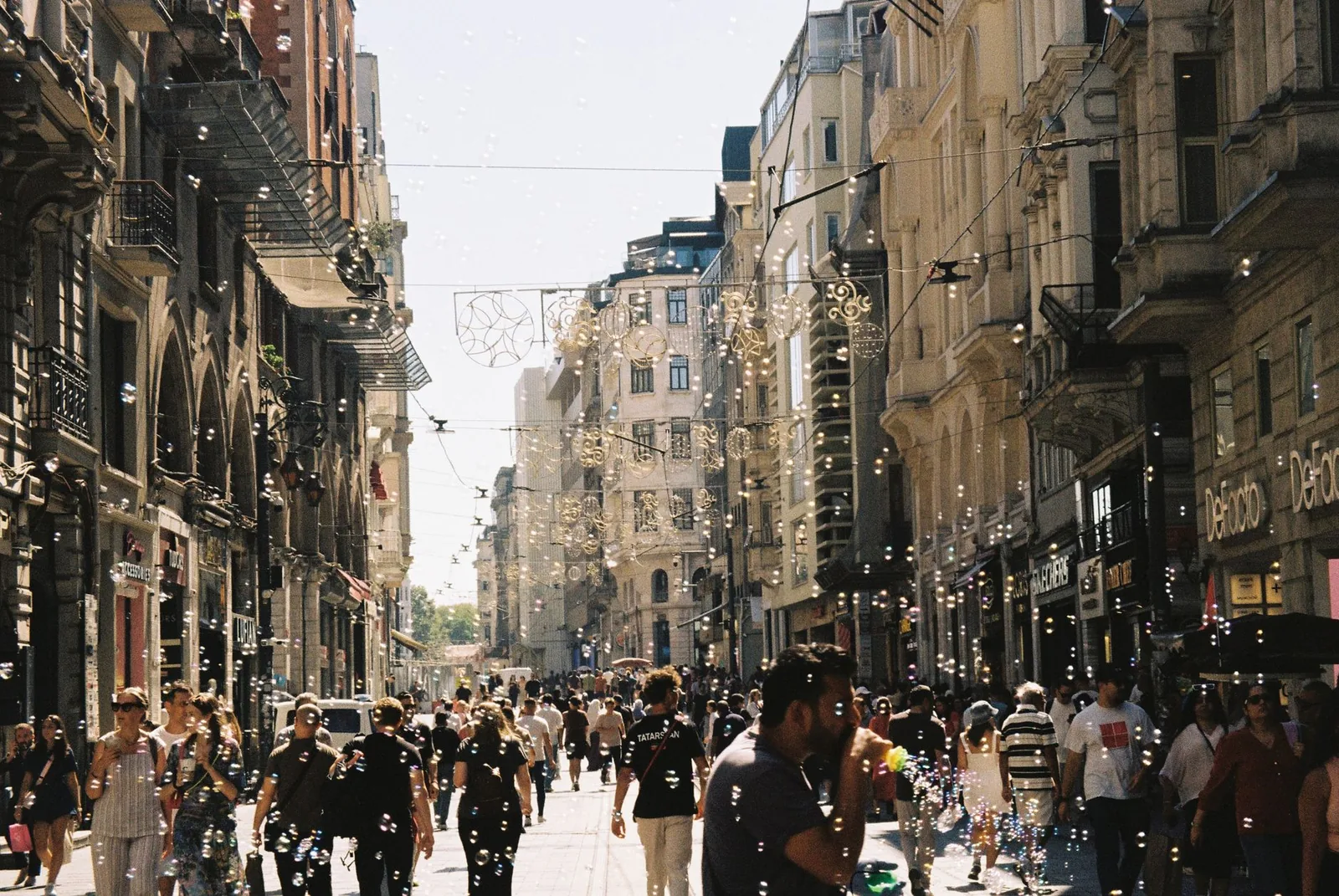
The shopping streets near Istiklal Avenue form a dense grid that rewards slow wandering more than fast walking. Streets like Mis Sokak, Kallavi Sokak and the lanes around Galatasaray Square each have their own character, from vintage clothing racks to small bookshops tucked into ground-floor apartments. These streets often connect directly to the courtyards and hans described above, so a single wrong turn can lead to an unexpected discovery.
For travellers interested in reading rather than shopping, our guide to the best bookshops in Beyoglu covers several shops hidden in these backstreets, many inside buildings with their own small courtyards. If vintage fashion is more your interest, the shopping streets near Istiklal Avenue extend toward Cihangir as well, covered in our piece on vintage clothing stores in Cihangir.
Because these shopping streets near Istiklal Avenue are so closely woven into the courtyard network, it helps to think of this guide less as a single route and more as a set of threads you can pull in whichever direction interests you most that day. Some travellers prefer to follow a theme, such as bookshops or antiques, while others simply let one open doorway lead to the next.
A walking route through the hidden courtyards
If you prefer a single route rather than scattered stops, start at Galatasaray Square and head toward Cicek Pasaji first, since it is the easiest entry point into this world of arcades. From there, work your way down the side streets toward Tunel, checking doorways for han entrances as you go; many are unmarked but open during business hours. This approach turns a complete guide to Beyoglu’s hidden courtyards and passages into something you can actually follow on foot, rather than just read about.
Budget around two to three hours for this stretch if you intend to actually step inside courtyards rather than just glance at their entrances, since each detour tends to lead to another. Mornings tend to be quieter for photography, while early evenings bring out the shopkeepers and tailors who give these spaces their working atmosphere. Either way, treat the route as flexible rather than fixed, since the appeal of Beyoglu’s hidden courtyards and passages lies partly in their unpredictability.
Along the way, the old tram line on Istiklal Avenue makes a useful landmark, since most passages and hans sit within sight of its tracks. Our guide to Istanbul’s old tram line on Istiklal explains its route in more detail, and it pairs naturally with this courtyard walk since both follow the same stretch of avenue.
For a broader route that includes Beyoglu’s main sights alongside its backstreets, see our complete guide to exploring Beyoglu on foot, which this courtyard-focused walk complements rather than repeats.
Passages and hans compared at a glance
Not every courtyard or passage rewards the same kind of visit, so it helps to know roughly what you are looking for before you set out. The table below breaks down the three main types you will encounter while following a guide to Beyoglu’s hidden courtyards and passages, along with who tends to enjoy each one most.
| Type | Typical character | Access | Best for |
|---|---|---|---|
| Pasaj (arcade) | Glass-roofed, lined with shops and restaurants | Open to the public, directly off Istiklal Avenue | First-time visitors, photography |
| Han courtyard | Open-air, balconies around a working courtyard | Plain street doors, usually open in daytime | Slower exploration, architecture |
| Side street courtyard | Small, residential, often unmarked | Found by chance while walking | Curious wanderers with time to spare |
Visiting the courtyards through the seasons
The experience of following a guide to Beyoglu’s hidden courtyards and passages changes noticeably with the seasons, even though the buildings themselves stay the same. In spring and autumn, mild weather and softer light make it easier to linger in open-air han courtyards without rushing. Summer afternoons can feel warm inside glass-roofed arcades like Cicek Pasaji, so many visitors prefer to explore those sections earlier in the day.
Winter brings its own advantages, since fewer tourists means some courtyards feel almost empty, and the working rhythm of tailors and small workshops becomes easier to observe without crowds. Rain can also highlight the practical reason these arcades were built in the first place, as shoppers duck under the same glass roofs that sheltered them more than a century ago. Whatever the season, Beyoglu’s hidden courtyards and passages remain accessible, since most are tied to daytime business hours rather than weather-dependent opening times.
Staying nearby in Cukurcuma
Exploring a complete guide to Beyoglu’s hidden courtyards and passages is far easier when you are staying within the neighbourhood rather than commuting in from elsewhere. Faik Pasha Hotels sits on Faik Pasha Street in Cukurcuma, itself known for antique shops and restoration workshops that echo the craftsmanship found in the hans nearby. The hotel’s four historic buildings, restored in 2010 to their original design, put you inside the same kind of Levantine architecture you’ll be seeking out on your walks.
Many guests choose a room with a kitchenette for a longer stay exploring the district at a relaxed pace; the Superior Double Room is a practical option for couples who want extra space to unwind after a day of walking. For a short video walkthrough of the rooms, see the clip below.
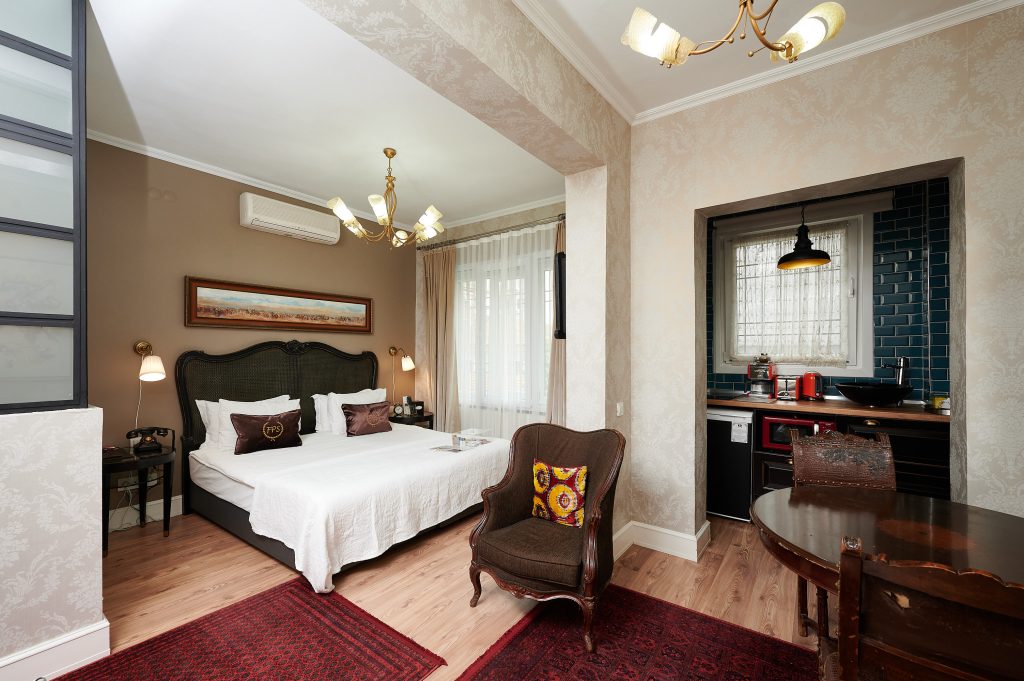
Rooms throughout the hotel feature wooden floors, antique furniture and handmade carpets collected over several years by founder Meral Kalav Demir, a design approach that mirrors the multicultural history of old Pera itself. If you’d like to see more of the interiors before booking, our gallery shows the antique furnishings in detail, and this Istanbul boutique hotel keeps that historic character at the centre of every room.
What our guests say
Guests often mention the location as a strong reason for choosing Faik Pasha Hotels over other parts of the city, which matters if you plan to spend your days exploring Beyoglu’s hidden courtyards and passages on foot.
“we picked the perfect place in the most perfect area of the city” – Summer Tyme Odell, April 2026, Tripadvisor
“The rooms were so authentic, very clean and comfortable.” – Pat P, October 2025, Tripadvisor
“Very clean, aesthetics with vintage furniture, cozy and comfortable.” – lariszakarath, May 2025, Tripadvisor
You can read more guest feedback on our Tripadvisor page, recognised with a Travellers’ Choice award for 2026, or browse recent photos on Instagram.
The future of Pera’s hidden spaces
Interest in Pera’s historic fabric has grown steadily as travellers look for alternatives to the busiest tourist routes, and Beyoglu’s hidden courtyards and passages are increasingly part of that shift. Restoration projects, some private and some municipal, continue to bring attention back to buildings that were neglected for decades after many Levantine and minority families left the district in the mid-twentieth century. This slow process means that a complete guide to Beyoglu’s hidden courtyards and passages written today may already look different in a few years, as more hans open their ground floors to small galleries, cafes or studios.
At the same time, rising footfall on Istiklal Avenue has pushed some longtime tenants, tailors, booksellers and small workshops, further into the side streets and courtyards, which paradoxically helps preserve the quieter character of these spaces. For visitors, this means the passages are likely to remain a contrast to the avenue rather than being absorbed by it, at least for the foreseeable future. Anyone returning to follow this guide to Beyoglu’s hidden courtyards and passages a second time will likely notice small changes, a new cafe here, a restored balcony there, without the overall character being lost.
Pairing a visit to the art galleries in Cukurcuma with a courtyard walk gives a good sense of where this quieter creative energy is heading next, since several gallery spaces occupy buildings with their own small courtyards.
Frequently Asked Questions
What is the easiest starting point for exploring Beyoglu’s hidden courtyards and passages?
Cicek Pasaji, just off Galatasaray Square on Istiklal Avenue, is the simplest first stop since its entrance is obvious and well known, after which the smaller side-street courtyards become easier to spot.
Are han courtyards open to the public?
Most han courtyards have plain street doors that are unlocked during business hours, since they still house working offices and small ateliers, though they are not formally marked as tourist attractions.
How does Levantine architecture differ from typical Ottoman buildings in this area?
Levantine architecture in Pera tends to favour European-style facades, cast-iron balconies and tall shuttered windows, reflecting the Italian, French and Ottoman-Greek builders active in the district through the nineteenth century.
Which shopping streets near Istiklal Avenue are best for a slower walk?
Mis Sokak and the lanes around Galatasaray Square are good choices, since they connect directly to several courtyards and hans described in this guide rather than running parallel to the avenue.
Is it practical to stay near these passages instead of in a larger hotel district?
Staying in Cukurcuma, a short walk from Istiklal Avenue, puts you within the same historic streets as the courtyards and hans, which suits travellers who want to explore on foot at an unhurried pace; see our guide to staying in Pera for more context.
A complete guide to Beyoglu’s hidden courtyards and passages is best used loosely, as an invitation to look twice at doorways you might otherwise pass by. Whether you spend an afternoon chasing arcades off Istiklal Avenue or simply wander into one han courtyard on your way to dinner, these spaces reward curiosity more than planning. If you’d like to base your stay among the same Levantine architecture described here, explore our room types, book directly through our reservation page, or reach us by email or WhatsApp to plan your visit.
Trackbacks & Pingbacks
[…] This guide is for travelers who want both things at once: easy access to Taksim’s transport hub and a calm street to come home to at night. We’ll walk through the residential pockets of Beyoglu that deliver exactly that balance, with a focus on Cihangir and Cukurcuma, including Beyoglu’s hidden courtyards and passages. […]
[…] This guide to Istanbul’s art galleries in Cukurcuma is written for travellers who want a slower, more textured side of Beyoğlu than Istiklal Street offers. It is not a list of opening-hours trivia, but a practical walk through what makes this neighbourhood worth an afternoon, or an entire stay, much like exploring Beyoğlu’s hidden courtyards and passages. […]