
This is a complete guide to Istanbul’s Pera district history, written for travellers who want more from their visit than a map of restaurants and shops. Pera was once the most cosmopolitan corner of the late Ottoman Empire, a narrow ridge above the Golden Horn where European consuls, Levantine merchants, Greek bankers and Armenian craftsmen lived side by side. Walking its streets today, from Istiklal Street down into Çukurcuma, you are still moving through that layered past.
Understanding Pera’s history changes how you see the neighbourhood. A plain stone facade becomes a former Levantine townhouse; a quiet side street reveals itself as the former heart of a vanished embassy quarter. This guide walks through a complete guide to Istanbul’s Pera district history period by period, points out the buildings and streets that still carry it, and explains how a stay in a restored historic property lets you experience it rather than simply read about it.
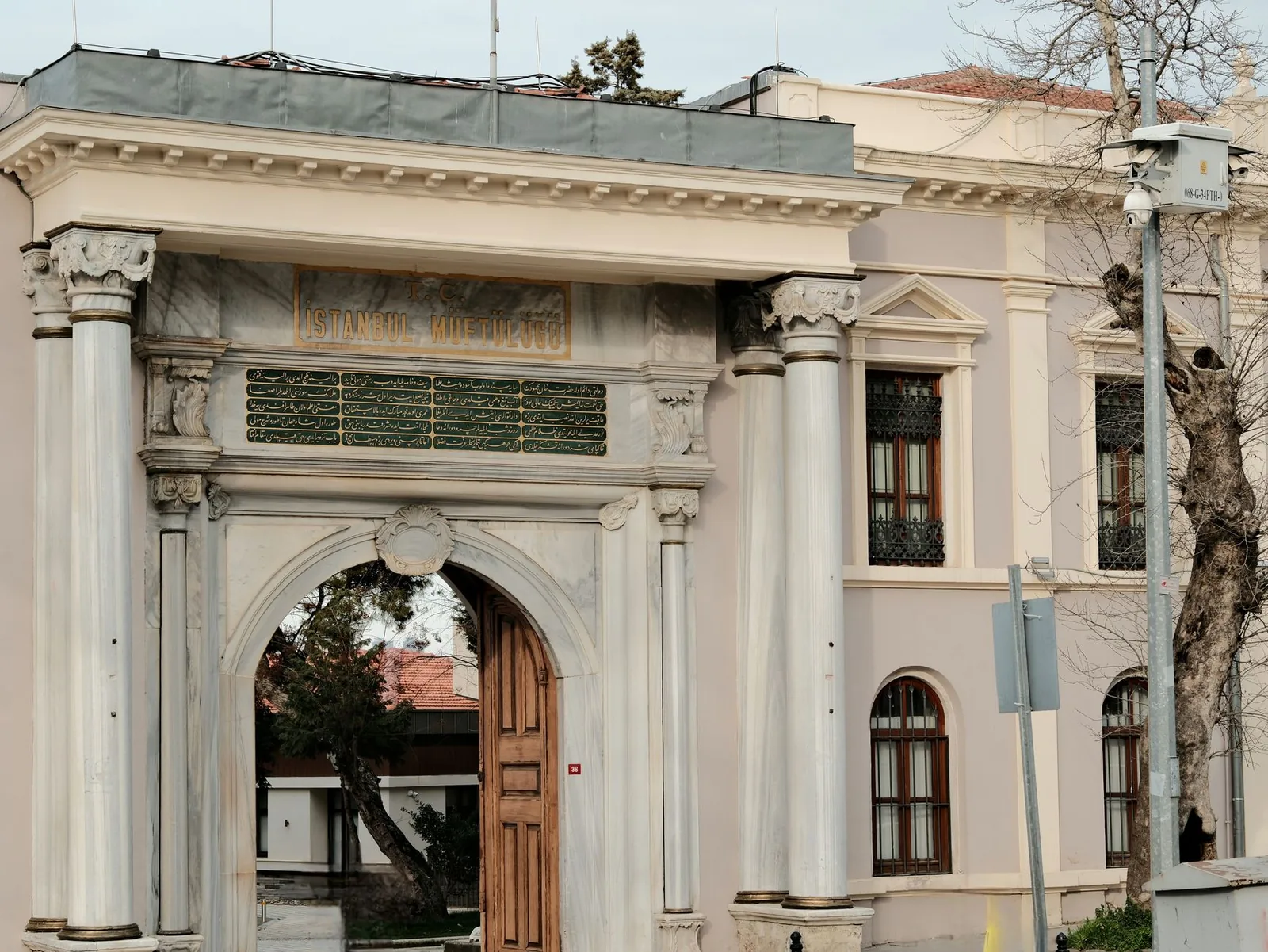
Contents
What Was Pera and Why a Complete Guide to Istanbul’s Pera District History Matters
The Levantine Origins of Pera
Grand Rue de Pera: The Street That Defined a District
Embassies, Grand Hotels and the Age of Elegance
Reading Levantine Architecture in Pera Today
Çukurcuma: Pera’s Quiet Antique Quarter
From Pera to Beyoğlu: A Name, a Republic, a Renewal
Old Pera and Beyoğlu Today: A Quick Comparison
Staying Inside Pera’s History at Faik Pasha Hotels
What Our Guests Say
A Complete Guide to Istanbul’s Pera District History: Frequently Asked Questions
The Future of Heritage Travel in Pera
What Was Pera and Why a Complete Guide to Istanbul’s Pera District History Matters
Any complete guide to Istanbul’s Pera district history has to start with the name itself. “Pera” comes from the Greek word for “beyond” or “across,” describing the district’s position across the Golden Horn from the old walled city of Constantinople. For centuries it stood apart, administratively and culturally, from the Ottoman capital on the other shore.
From the Byzantine era onward, Pera was home to foreign traders, first Genoese and Venetian, later a mix of European nations who were granted trading privileges under Ottoman capitulations. By the nineteenth century it had become something unique in the Ottoman world: a district where Muslims were a minority and where French, Greek, Armenian, Italian and English could all be heard on the same street corner.
That multicultural character is the reason this history still matters to visitors today. The buildings, religious institutions, schools and social clubs built during this period left behind an architectural record of cosmopolitan life that survives, in fragments, throughout modern Beyoğlu. Few areas of the city reward a slow, informed walk quite the way Pera does.
It also helps to understand why so many guidebooks gloss over this period in a single paragraph. The sheer number of communities, languages and institutions packed into a few square kilometres makes Pera genuinely difficult to summarise, which is exactly why a longer, dedicated overview is useful before setting out on foot.
The Levantine Origins of Pera
The word “Levantine” refers to communities of mixed European and local origin who settled along the eastern Mediterranean, many of them in Ottoman port cities including Izmir, Thessaloniki and Istanbul. In Pera, Levantine families of Italian, French, Maltese and Greek descent built the townhouses, chapels, schools and commercial buildings that still define the district’s streets. Their presence is central to a complete guide to Istanbul’s Pera district history because it was this community, more than any other, that gave Pera its distinctive European appearance within an Ottoman city.
Levantine families were often merchants, bankers, pharmacists and diplomats who worked closely with both the Ottoman court and foreign consulates. They built in a style that borrowed from Italian and French urban architecture, with wrought-iron balconies, tall shuttered windows and courtyard entrances, while still using Ottoman building techniques and local materials.
Many of these families worshipped in the district’s Catholic and Orthodox churches, educated their children in foreign-run schools, and socialised in clubs and theatres that no longer exist but whose buildings sometimes do. Their legacy is one of the clearest expressions of Levantine architecture Istanbul has preserved into the present day, particularly in the backstreets around Çukurcuma and Cihangir.
Some Levantine families remained in Istanbul for generations after the empire’s end, quietly maintaining churches, schools and cemeteries that are easy to miss but still active today. Their continued presence is one of the lesser-known threads running through any serious account of Pera’s past, and it is part of what makes the district feel inhabited rather than simply preserved.
Grand Rue de Pera: The Street That Defined a District
No discussion of Pera’s history is complete without its main artery, the Grand Rue de Pera, known today as Istiklal Street. In the nineteenth century this was Istanbul’s most fashionable avenue, lined with European-style shops, patisseries, theatres and the flagship stores of international brands. Photographs from the era show horse-drawn carriages and, later, the tram that still runs along the street today.
The historic tram line on Istiklal is a direct physical link to this period; the nostalgic red tram that photographs so well today follows a route that has carried residents and visitors along the Grand Rue for well over a century. Walking its length from Tünel to Taksim remains the single best way to trace the spine of old Pera.
Side streets branching off Istiklal reveal more intimate layers of this history: passages with glass roofs, arcades that once housed booksellers and jewellers, and apartment blocks with elaborate stone or stucco facades. Several of these passages still function as shopping arcades, giving visitors a rare chance to walk through a commercial space largely unchanged in form since the late Ottoman period.
Each of these passages has its own small story, from theatres that once hosted touring European companies to shops that supplied the Levantine households of the surrounding streets. Taken together, they form a kind of open-air archive that rewards slow, repeated visits rather than a single rushed walk.
Embassies, Grand Hotels and the Age of Elegance
Pera’s importance was not only commercial but diplomatic. Because Pera stood outside the old city walls, many European powers chose to build their embassies here rather than in Constantinople proper, and several of these grand consular buildings still stand along and near Istiklal Street, now serving as consulates general. Their presence reinforced Pera’s identity as the “European” half of the Ottoman capital.
Around the embassies grew a culture of grand hotels, patisseries and social clubs that catered to diplomats, wealthy travellers and the local Levantine elite. This was the era that gave Pera its reputation for elegance, an image still invoked today whenever a property in the district is described as having an “old Pera” atmosphere. It is worth noting that none of these grand nineteenth-century hotels should be confused with smaller boutique properties that have opened in later decades; each tells a different, equally genuine, chapter of the neighbourhood’s story.
For today’s visitor, this history explains why staying in a restored historic building in the district feels different from staying in a modern hotel elsewhere in Istanbul. The scale, the materials and the street pattern all date back to this formative period, even where individual buildings have changed hands and uses many times since.
Diplomats and travellers of that era often moved between embassy receptions, hotel dining rooms and the theatres of the Grand Rue in a single evening, a rhythm of life that is hard to imagine now but that shaped the scale and spacing of the buildings still standing along these streets.
Reading Levantine Architecture in Pera Today
Learning to read Levantine architecture Istanbul style turns an ordinary walk into something closer to an open-air museum visit. Typical features include tall, narrow windows with wooden shutters, decorative iron balconies, stone or carved wooden door surrounds, and interior courtyards shared by several households. Many buildings combine European decorative details on the facade with traditional Ottoman timber-frame construction underneath, a hybrid approach that defines the look of old Pera.
Our dedicated piece on Ottoman style architecture in Pera goes street by street through Çukurcuma, pointing out specific buildings and the details worth noticing. It pairs well with this broader historical overview, since the two together connect the “why” of Pera’s past with the “what” you can actually see on a walk today.
Restoration has played as important a role as original construction in preserving this architecture. Many of the townhouses that line Faik Pasha Street and the surrounding lanes were built in the late 1800s and have since been restored according to their original design, construction techniques and plans, a process that keeps the streetscape legible rather than replacing it with modern infill. Readers interested in the wider regional context of this architectural style may also enjoy our sister publication’s guide, Beyoğlu’nda Levanten Mimarisi: Pera’nın 19. Yüzyıl Yapılarını Tanıma Rehberi.
Looking up rather than straight ahead is one of the simplest ways to notice this layering, since many ground floors have been modernised for shops while upper storeys retain their original shutters, balconies and cornices. A camera with a wide-angle lens, or simply a willingness to pause and look up, is often all that is needed to spot details most visitors walk straight past.
Çukurcuma: Pera’s Quiet Antique Quarter
If Istiklal Street was Pera’s grand public face, Çukurcuma was its quieter residential slope, a warren of steep lanes descending toward the Bosphorus side of the ridge. Today the neighbourhood is best known for its antique shops, vintage furniture stores and restoration workshops, a reputation that grew naturally out of the Levantine households who once filled these homes with imported furniture, paintings and household objects.
Many of the antique pieces now sold in Çukurcuma’s shops and flea markets originally furnished Pera’s nineteenth-century apartments, making a stroll through the district’s dealers a genuine, tangible link to the material culture of old Pera. First-time visitors looking to understand how to approach this shopping culture respectfully and effectively will find practical advice in our Çukurcuma flea market shopping tips.
The neighbourhood’s proximity to Galata Tower, Cihangir and Istiklal Street means it sits at the quiet, walkable centre of several historic layers at once, Genoese, Levantine and early Republican, without the crowds that gather closer to Taksim Square.
Many dealers in Çukurcuma are happy to talk about the origin of a particular piece if asked politely, and these conversations are often as informative as any museum label. Spending an unhurried morning moving between shopfronts, rather than rushing through on a single pass, tends to reveal far more of this layered history.
From Pera to Beyoğlu: A Name, a Republic, a Renewal
The name “Pera” gradually gave way to “Beyoğlu” over the course of the twentieth century, a shift that paralleled larger changes in the city and the new Turkish Republic founded in 1923. As Istanbul’s economic and diplomatic centre of gravity shifted, many of Pera’s Levantine and minority communities gradually left the city over subsequent decades, and some of the grand buildings they left behind fell into disrepair.
From the later twentieth century onward, renewed interest in Istanbul’s architectural heritage brought restoration projects back to the district, reviving townhouses, passages and churches that had stood empty or neglected for years. This renewal is still visible today in the mix of carefully restored facades and ongoing restoration workshops scattered throughout Beyoğlu, particularly in Çukurcuma.
For travellers, this history explains the layered feeling of the district: a Levantine townhouse might sit beside a mid-century apartment block, which in turn faces a workshop restoring nineteenth-century furniture. Few guides capture this complexity as directly as a dedicated overview, which is exactly why a complete guide to Istanbul’s Pera district history is useful before you set out walking.
The transition from Pera to Beyoğlu was never a single clean break but a slow overlapping of names, uses and communities, and traces of all three periods, Ottoman, Levantine and early Republican, can still be found within a few minutes’ walk of one another.
Old Pera and Beyoğlu Today: A Quick Comparison
The table below summarises how key elements of historic Pera correspond to what visitors encounter in Beyoğlu today, useful as a quick reference while planning a walking route.
| Historic Pera | Beyoğlu today | Where to see it |
|---|---|---|
| Grand Rue de Pera | Istiklal Street and its historic tram | Tünel to Taksim |
| Levantine townhouses | Restored heritage buildings and boutique stays | Çukurcuma, Firuzağa |
| Foreign consulates | Consulates general along Istiklal | Near Galatasaray |
| Household antiques of Levantine families | Antique shops and flea markets | Çukurcuma |
| Genoese Galata tower & walls | Galata Tower viewpoint | Galata |
Keeping a table like this in mind while walking makes it much easier to connect a street name or a building style to the period it belongs to, rather than treating the whole district as a single undifferentiated “old town.”
Staying Inside Pera’s History at Faik Pasha Hotels
Reading about Pera’s history is one thing; sleeping inside it is another. Faik Pasha Hotels occupies four historic buildings on Faik Pasha Street in Çukurcuma, built in the late 1800s and restored in line with their original design, construction techniques and plans. This makes it a genuine heritage hotel Istanbul travellers can use as a base for exploring the very history described throughout this guide.
The hotel’s founder and designer, Meral Kalav Demir, a retired lawyer, spent about three years collecting antique furniture from Istanbul’s dealers and flea markets, many of them in Çukurcuma itself, to furnish the rooms. The result is an interior of wooden ceilings and floors, handmade carpets, antique furniture and hundreds of period oil paintings that recall the multicultural domestic life of old Pera rather than reproducing it as a theme.
For guests who want a sense of this atmosphere at its most spacious, the Panoramic Penthouse with Lift offers two bedrooms, two bathrooms and an open kitchen, making it suited to families or small groups wanting to settle into the neighbourhood for several days.
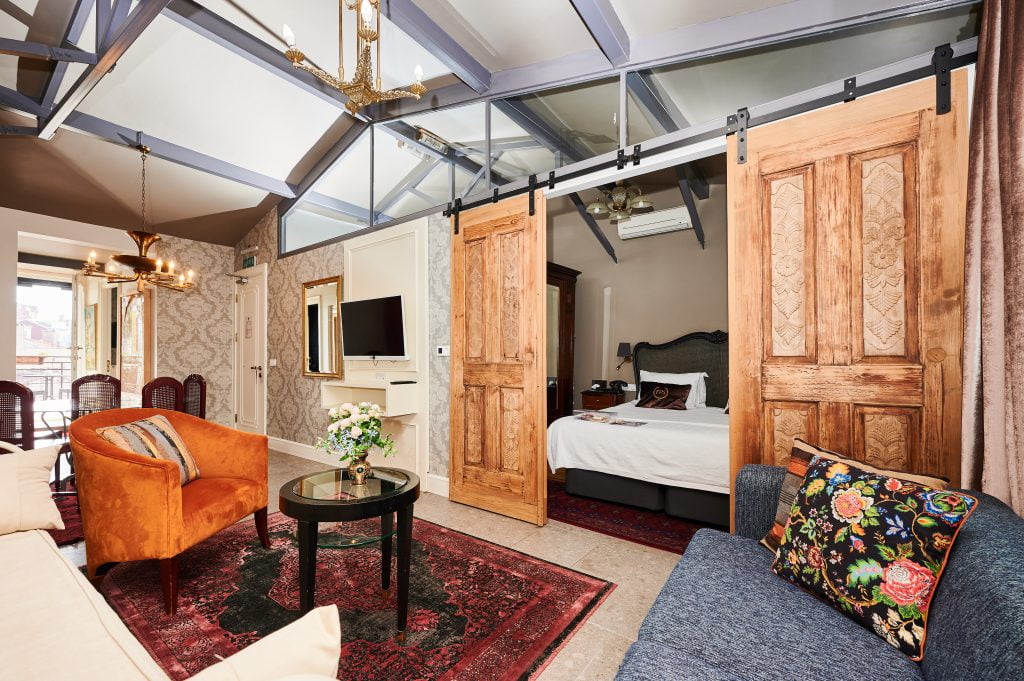
See a short walkthrough of the interiors in this room tour video.
Breakfast at Faik Pasha Cafe, served from 08:00 to 17:00, leans on homemade breads, pastries and jams that guests regularly single out for praise, a small but genuine continuation of Pera’s tradition of neighbourhood patisseries and cafes. The green courtyard attached to the cafe offers a quiet spot to plan the day’s walk before heading out into Çukurcuma’s lanes.
Because the hotel sits directly among the streets described in this guide, guests can finish an afternoon of walking past Levantine facades with a short stroll home rather than a taxi ride back across the city, which in itself says something about how intact this corner of old Pera remains.
What Our Guests Say
Guests who choose this kind of Ottoman style hotel Istanbul stay often comment on exactly the qualities this guide has described: authenticity, history and a strong sense of place.
“we picked the perfect place in the most perfect area of the city” – Summer Tyme Odell, April 2026, Tripadvisor
“The rooms were so authentic, very clean and comfortable.” – Pat P, October 2025, Tripadvisor
“Very clean, aesthetics with vintage furniture, cozy and comfortable.” – lariszakarath, May 2025, Tripadvisor
You can read more guest feedback on our Tripadvisor page, recognised with a Travellers’ Choice 2026 award, as well as on Google and Otelz.
A Complete Guide to Istanbul’s Pera District History: Frequently Asked Questions
What does “Pera” mean and why was it called that?
“Pera” comes from the Greek word for “beyond,” describing the district’s position across the Golden Horn from the old walled city. It was the name used for the neighbourhood throughout the Ottoman period before gradually being replaced by “Beyoğlu” in the twentieth century.
What is Levantine architecture and where can I see it in Pera?
Levantine architecture refers to buildings constructed by Pera’s mixed European-origin communities, combining European decorative facades with Ottoman construction methods. You can see well-preserved examples along Istiklal Street’s side passages and throughout Çukurcuma‘s residential lanes.
Is Çukurcuma part of historic Pera?
Yes, Çukurcuma was a residential slope within the broader historic Pera district, known for its Levantine townhouses and, today, for its antique shops and restoration workshops.
What is the best way to explore Pera’s history on foot?
Start along Istiklal Street to trace the old Grand Rue de Pera, then branch into Çukurcuma and Cihangir for quieter residential streets. Our complete guide to exploring Beyoğlu on foot lays out a practical route.
Where can I stay to experience Pera’s historic atmosphere directly?
A restored historic building in Çukurcuma, such as Faik Pasha Hotels, an authentic boutique hotel in Beyoğlu, lets you sleep inside the same streets and architecture described throughout this guide rather than simply viewing them from outside.
The Future of Heritage Travel in Pera
Interest in Pera’s layered past shows no sign of slowing. As more Levantine-era buildings undergo sympathetic restoration, the district is gradually shifting from a neighbourhood known mainly for nightlife and shopping to one increasingly valued for its architectural and cultural depth. This complete guide to Istanbul’s Pera district history is itself a small part of that shift, aimed at travellers who want context, not just a checklist of sights.
Restoration projects that respect original construction techniques, rather than replacing historic fabric with modern materials, are likely to remain the gold standard for heritage buildings in the district, including the small hotels and apartments that have taken on long-term custodianship of these spaces. Travellers increasingly seek out small hotels in Beyoğlu precisely because they offer this kind of direct, physical connection to the past that larger modern properties cannot replicate.
As Çukurcuma’s antique trade continues and more visitors arrive specifically to study and photograph Levantine architecture Istanbul has preserved, the neighbourhood’s quieter streets seem set to become an increasingly recognised part of any serious historical visit to Istanbul, alongside the more famous sites of the old walled city.
Whatever shape that future takes, the core appeal is unlikely to change: a small, walkable district where diplomatic, commercial and domestic history sit within a few streets of one another, still legible to anyone willing to look closely. That, ultimately, is the purpose of any good complete guide to Istanbul’s Pera district history, to help travellers notice what is already there.
If this guide has made you want to experience Pera’s history firsthand rather than just read about it, consider basing your stay among the very buildings it describes. Explore our full range of room types, from the compact Standard Double Room to the spacious Grand Suite Deluxe Apartment, and book directly through our reservation engine for the best available rates. For a personal touch, write to us at reservations@faikpashahotels.com or message us on WhatsApp, and we will help you plan a stay inside one of the most historic corners of Pera.
Trackbacks & Pingbacks
[…] that two days never feel repetitive. Beyoglu is dense with layers of history, from the old Pera mansions to the antique lanes of Çukurcuma, and it rewards travelers who plan loosely but well. This guide […]
[…] moody and jazz-leaning around the backstreets, and quieter and more acoustic once you cross into Galata or Cihangir. We’ll walk through each pocket so you can pick a night that matches your mood, whether […]