
This guide to Istanbul’s old tram line on Istiklal starts with the sound most people remember first from Beyoğlu: the bell of the old red tram rolling down the middle of the crowd. It is meant for travelers who want to understand where the line came from, exactly where it runs, and which stops are worth getting off for. It is short enough to read before you walk out the door and detailed enough to use all day.
Istiklal Avenue has always been the backbone of this part of the city, and the tram is simply the easiest way to feel its length without rushing. Whether you are staying nearby or just passing through on a longer Istanbul trip, this guide to Istanbul’s old tram line on Istiklal will help you plan a slow, enjoyable afternoon around it.
A guide to Istanbul’s old tram line on Istiklal: a short history
The original tram on Istiklal Avenue began carrying passengers in the early twentieth century, when the street was still known as the Grande Rue de Pera and the neighborhood was home to a mix of foreign merchants, diplomats and local families. Electric trams largely replaced horse-drawn ones in this period, and for decades the line was simply part of daily life in Pera, not a tourist attraction.
The tram was eventually removed from service in the mid-twentieth century as the city modernized its transport network. It was reintroduced decades later in a nostalgic form, using restored vintage carriages on the same historic track through the avenue. Today it runs mainly as a heritage line, and that history is exactly what makes any guide to Istanbul’s old tram line on Istiklal different from a simple transit map: the carriages themselves are part of the story.
Understanding this background changes how you experience the ride. You are not just moving between two points; you are tracing a route that has carried residents of this part of the city for well over a century, through empires, name changes and a full return of the avenue to pedestrian life.
The route, step by step
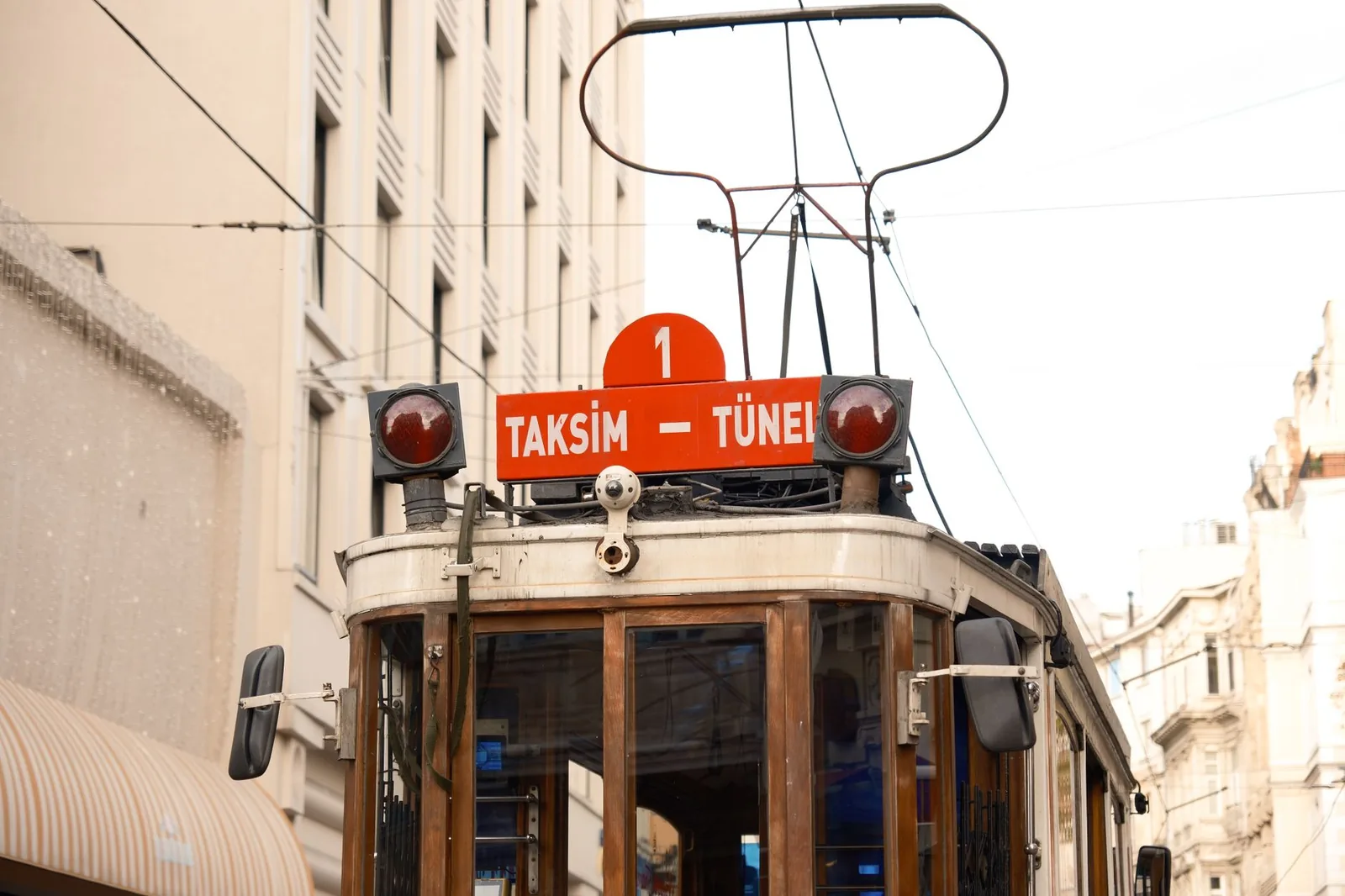
The nostalgic tram runs along Istiklal Avenue between two fixed points: Tünel at the southern end, near Galata, and Taksim Square at the northern end. This single straight line is one of the easiest things to remember in the entire city, which is part of why this guide keeps coming back to it as a simple orientation tool.
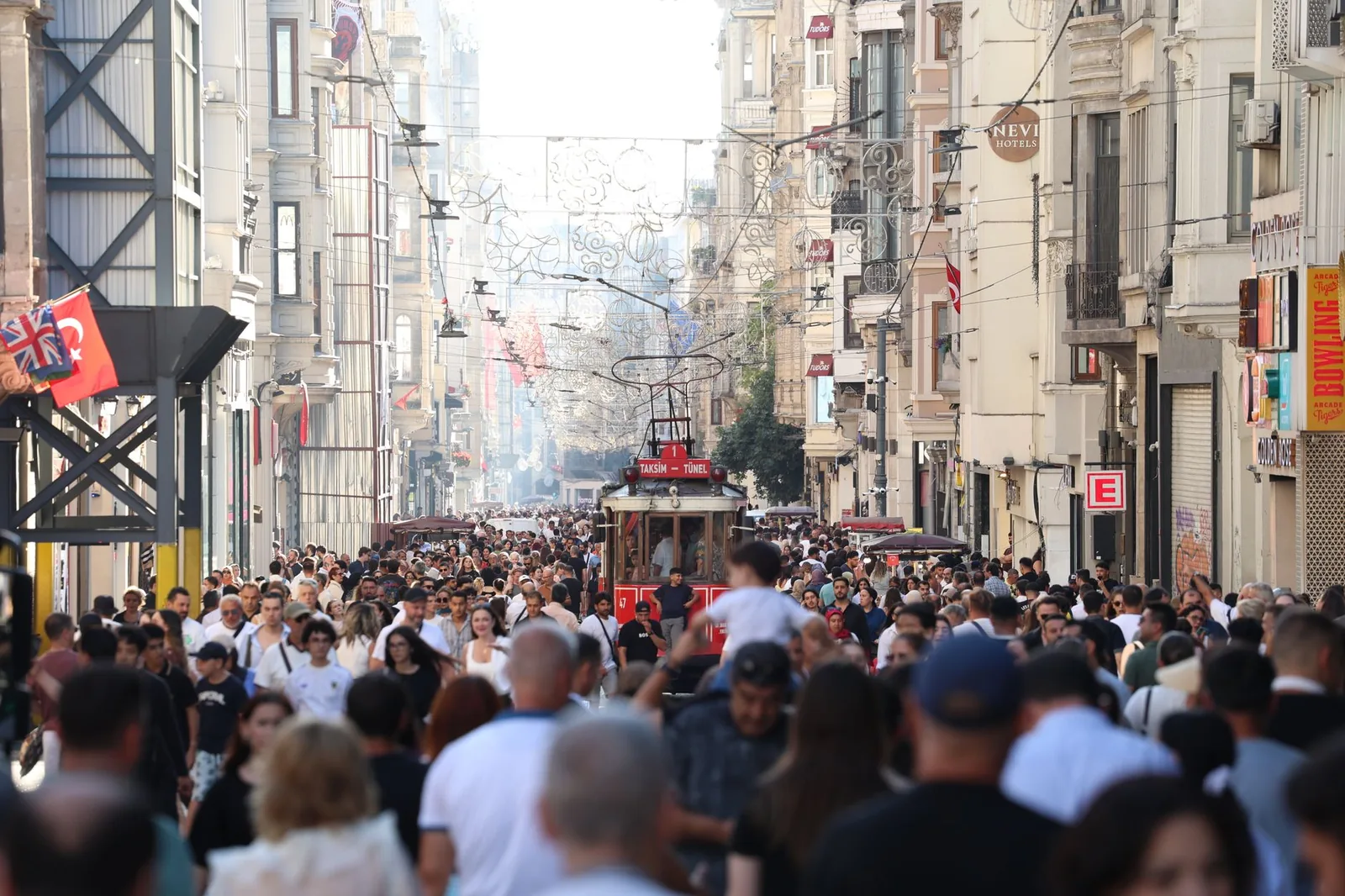
The carriages move slowly, sharing the avenue with pedestrians rather than running on a separate track, so the ride itself takes a little while even though the distance is short. Many visitors treat it less as transport and more as a short, scenic trip to bookend a longer walk. The point is not speed, it is the view from inside a restored carriage moving through one of the busiest streets in the city.
Because the line only has two end stations, there is no risk of getting lost on it. You can simply walk until you see the tracks, wait for the next carriage, and ride in either direction depending on where you started your day.
Tünel: the southern end
Tünel station sits at the edge of Beyoğlu, close to Galata Tower and the steep streets that drop down toward the Golden Horn in the distance. It is also home to one of the oldest underground funiculars in the world, which connects this point down toward Karaköy. Starting your ride here means you begin on a quieter note before the avenue gets busier further north.
Taksim Square: the northern end
At the other end of the line is Taksim Square, the main transport hub for this side of the city and a natural meeting point. Most people either start or finish their walk along Istiklal Avenue here, since it connects easily to buses, the metro and the wider Beyoğlu district beyond.
Key stops along this guide to Istanbul’s old tram line on Istiklal
Between Tünel and Taksim, the tram passes some of the most recognizable buildings and corners in Istiklal Avenue‘s long history. Even if you do not get off at every stop, knowing what you are passing adds a lot to the ride. This part of the guide focuses on what to actually look for from the window or the sidewalk.
- Historic apartment buildings and former embassy buildings from the late Ottoman and early Republican periods
- Churches tucked between shopfronts, remnants of the avenue’s multicultural past
- The Flower Passage and the Fish Market, just off the main avenue
- Galatasaray Square, roughly at the midpoint of the line
- Small side streets leading toward Cihangir and Çukurcuma
If you want a slower, more structured way to see these landmarks on foot rather than from the tram, the complete guide to exploring Beyoğlu on foot pairs well with this one, letting you combine a short tram ride with a longer walking route through the surrounding streets.
Shopping streets near Istiklal Avenue
One of the easiest ways to break up your ride is to step off at any point and explore the narrow streets branching away from the main strip. The shopping streets near Istiklal Avenue range from well-known chain stores directly on the avenue to small, independent shops just one or two turns away. This mix is part of what keeps the area interesting for repeat visitors.
For a more detailed look at where to find these smaller streets and what sets them apart from the main avenue, the dedicated guide to shopping streets near Istiklal Avenue goes block by block. It is worth reading before you set off if browsing shops is as important to your day as the tram ride itself.
If old books and quieter corners interest you more than storefronts, the backstreets covered in the guide to the best bookshops in Beyoglu sit just off the tram’s route and make a good detour in either direction.
Staying near the line: Pera hotels and where we fit in
Because the tram only runs along one avenue, choosing somewhere to stay nearby makes the whole experience simpler; you can walk to the tracks, ride a short stretch, then walk back into quieter streets to rest. Many Pera hotels advertise their proximity to Istiklal Avenue, and Faik Pasha Hotels sits in exactly this kind of position, in the historic Çukurcuma district just off the busier part of Beyoğlu.
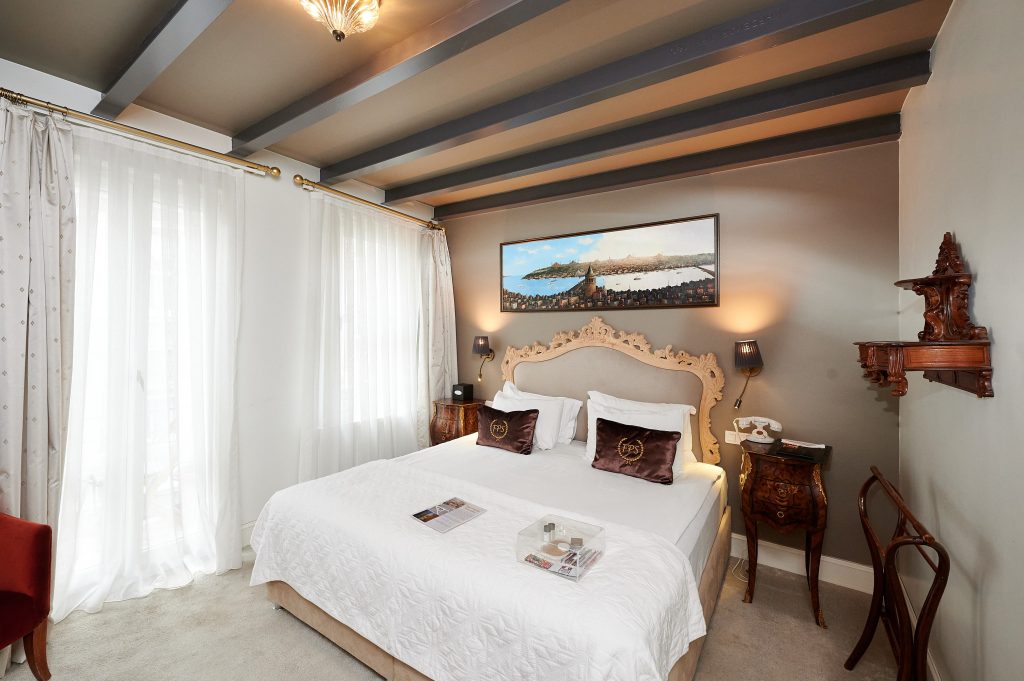
Our rooms occupy four restored nineteenth-century buildings, furnished with antique pieces collected over several years from Istanbul’s antique dealers and flea markets. Families or small groups who want more space and a kitchen often choose the Grand Suite Two-Bedroom Apartment, which gives everyone room to spread out after a day of walking the avenue.
You can see more of the rooms and the building itself in this short video tour.
Guests who have stayed with us often mention exactly the kind of location this guide is built around. As one recent review put it:
“we picked the perfect place in the most perfect area of the city” – Summer Tyme Odell, April 2026, Tripadvisor
Another guest, who stayed in one of our larger apartments, added:
“We stayed in the Penthouse with the lift which felt like our home away from home.” – Summer Tyme Odell, April 2026, Tripadvisor
For more on the wider neighborhood and what makes it a good base, see our overview of staying in Pera for first-time visitors.
Practical tips for riding the tram
A few small details make the ride smoother, especially during busy hours. This section is aimed at avoiding the most common frustrations rather than covering every possible scenario.
- Expect crowds in the late afternoon and evening, especially on weekends; mornings are quieter.
- The tram shares the street with pedestrians, so it moves slowly and stops are not always obvious; follow the tracks on the ground.
- Carriages fill up quickly in peak season, so do not plan it as your only way to get between Tünel and Taksim if you are in a hurry.
- Photographs from the side of the street, rather than directly on the tracks, are usually safer and still capture the carriage well.
- Combine the ride with a stop at Galatasaray Square, roughly halfway, to split a longer walk into two shorter ones.
None of these tips require planning in advance; they are simply things that make the ride more comfortable once you are there. This guide to Istanbul’s old tram line on Istiklal is meant to be used loosely, not followed like a strict itinerary.
What else to see around the avenue
Once you step off the tram, the surrounding streets open up quickly in every direction. The district of Beyoğlu stretches well beyond the avenue itself, and a short detour can take you toward quieter residential streets or down toward the water. If antiques and restoration workshops interest you, Çukurcuma is only a short walk from the tram’s southern end near Tünel.
Travelers planning a longer stay often use the tram line as one fixed point in a wider two-day plan. If that sounds useful, the weekend itinerary for Beyoğlu builds a full schedule around exactly this kind of walking and riding mix.
For travelers comparing where to stay before booking, it also helps to look at options framed specifically around this street; our dedicated overview of a hotel near Istiklal Street covers the practical side of choosing a base nearby in more detail.
Frequently Asked Questions
What is the nostalgic tram on Istiklal Avenue?
It is a restored heritage tram line running on the original tracks of Istiklal Avenue, using vintage-style red carriages. This guide to Istanbul’s old tram line on Istiklal explains both its history and its current short route between Tünel and Taksim Square.
Where does the tram start and end?
The line runs between Taksim Square at the northern end and Tünel station near Galata Tower at the southern end, covering the full length of Istiklal Avenue in between.
Is the tram the fastest way to get around Beyoğlu?
No, it moves slowly and shares the street with pedestrians, so it is better treated as a short, scenic ride than a quick way to get somewhere. Many visitors prefer to walk part of the avenue and ride the tram for the rest.
What should I see near the tram line besides the avenue itself?
Side streets just off the main avenue lead to some of the best shopping streets near Istiklal Avenue, along with quieter neighborhoods like Çukurcuma and Cihangir, both an easy walk from either end of the line.
Is it easy to find hotels near the tram line?
Yes, several Pera hotels sit within easy reach of the avenue, including our own historic rooms at Faik Pasha Hotels, set in the Çukurcuma district close to both ends of the tram route.
Plan your stay around the avenue
Riding the old tram is one of those simple pleasures that rarely disappoints, and pairing it with a stay nearby makes the whole experience far easier to repeat over a few days. If this guide to Istanbul’s old tram line on Istiklal has you thinking about where to base yourself, we would be glad to help you plan the stay itself. You can check availability directly through our booking engine, write to us at reservations@faikpashahotels.com, or message us on WhatsApp for a quick reply.
Trackbacks & Pingbacks
[…] south along Istiklal toward Galatasaray Square, duck into the side alleys around the fish market, Balık Pazarı, where […]